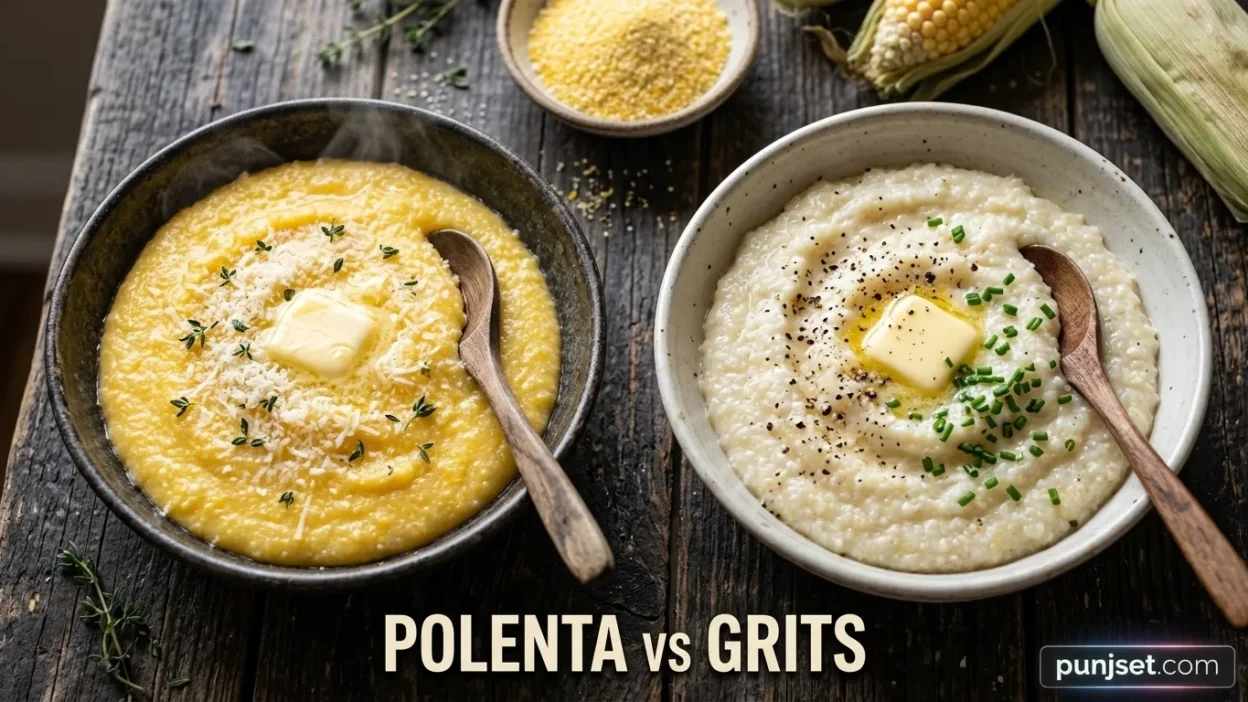
Polenta and grits are two popular foods made from ground corn. They look similar, and both can be cooked with water, milk, broth, or other liquids to create a soft, creamy dish. However, they have different cultural roots, traditional corn varieties, textures, and common uses. If you have ever wondered whether polenta and grits are the same, the short answer is no. They are closely related, but they are not exactly alike.
Polenta is traditionally associated with Italy, where it is often made from yellow cornmeal and served as a creamy side dish or allowed to cool and sliced into pieces. Grits are strongly associated with the American South and are commonly made from ground white corn, although yellow varieties are also available. Both foods can be served with butter, cheese, vegetables, meat, or seafood. Their flavor and texture depend on the type of corn, how finely it is ground, and how it is cooked. Understanding these differences can help you choose the right ingredient for breakfast, dinner, or your favorite recipe.
Quick Answer: Polenta vs Grits
Polenta is an Italian dish traditionally made from ground yellow corn, while grits are a Southern American dish commonly made from ground white corn. Both are cooked in liquid until soft. Polenta is often served with Italian-style meals, while grits are popular at breakfast and with Southern dishes such as shrimp and grits.
Why Do People Confuse Polenta and Grits?
People confuse polenta and grits because both are made from corn and can have a similar creamy appearance. They are also prepared in much the same way: ground corn is slowly cooked in liquid until it becomes tender.
Several similarities make the distinction less obvious:
- Similar ingredients: Both use ground corn as their main ingredient.
- Similar cooking methods: Both can be simmered in water, milk, or broth.
- Similar textures: Depending on the grind and cooking time, both can be creamy, soft, or thick.
- Similar toppings: Butter, cheese, herbs, vegetables, and meat can be added to either dish.
- Different names for related foods: Their names reflect different culinary traditions rather than completely different ingredients.
The biggest differences are their traditional origins, the corn commonly used, and the ways people usually serve them. However, these distinctions are not absolute. Yellow grits exist, and polenta can be made with different types of corn.
What Is Polenta?
Polenta is a traditional Italian dish made by cooking ground corn in water, stock, or another liquid. The word can refer to both the cooked dish and the cornmeal used to prepare it.
Where Does Polenta Come From?
Polenta is closely associated with Italian cooking, especially the northern regions of Italy. Before corn became common in Europe, older versions of polenta were made from other grains. Corn became an important ingredient after it arrived in Europe from the Americas.
Today, corn polenta is enjoyed in many countries and can be prepared in several ways.
What Does Polenta Taste Like?
Polenta has a mild, slightly sweet corn flavor. Its taste changes depending on the corn used and the ingredients added during cooking.
For example, polenta cooked with butter and Parmesan cheese tastes rich and savory. Polenta made with water and a little salt has a simpler corn flavor.
What Is the Texture of Polenta?
Polenta can have several textures:
- Creamy polenta: Soft and smooth, often served hot.
- Thick polenta: Firm enough to hold its shape on a plate.
- Sliced polenta: Cooked polenta that has cooled, become firm, and been cut into pieces.
- Grilled or baked polenta: Firm pieces cooked again to develop a golden outside.
The final texture depends on the cornmeal’s grind, the amount of liquid, and the cooking method.
How Is Polenta Usually Served?
Polenta is often served as a side dish or as the base for a main meal. Common pairings include tomato sauce, mushrooms, roasted vegetables, braised meat, and cheese.
For example, creamy polenta topped with sautéed mushrooms makes a satisfying vegetarian meal. Firm slices of polenta can also be grilled and served alongside vegetables or meat.
What Are Grits?
Grits are a traditional American dish made from ground corn. They are especially popular in the Southern United States, where they are eaten for breakfast and served with lunch or dinner.
Where Do Grits Come From?
Grits have deep roots in Indigenous American food traditions. Corn preparation methods used by Indigenous peoples influenced the development of several traditional dishes in the Americas. Grits later became an important part of Southern American cooking.
Today, grits are a familiar food in Southern homes and restaurants.
What Do Grits Taste Like?
Plain grits have a mild corn flavor. Their taste can be creamy and slightly sweet, but the final flavor depends on how they are prepared.
Grits cooked with milk, butter, salt, and cheese are rich and savory. Some people prefer them with pepper, while others serve them with eggs, bacon, or seafood.
What Is the Texture of Grits?
Grits can be creamy, thick, or slightly grainy. Their texture depends on the type of corn, the size of the ground particles, and the cooking time.
Common types include:
- Stone-ground grits: Usually coarser and more varied in texture, with a strong corn flavor.
- Regular grits: A common everyday option that cooks more quickly than many stone-ground varieties.
- Quick grits: Finely processed grits designed to cook in less time.
- Instant grits: A precooked or specially processed option that requires very little preparation.
Stone-ground grits generally take longer to cook than quick or instant grits.
How Are Grits Usually Served?
Grits are commonly served as a breakfast dish with butter, cheese, eggs, or bacon. They are also used in Southern recipes.
One well-known example is shrimp and grits, a dish in which cooked grits are topped with seasoned shrimp and often a savory sauce. Grits can also accompany fried fish, vegetables, or other main dishes.
Polenta vs Grits: Comparison Table
| Feature | Polenta | Grits |
|---|---|---|
| Traditional association | Italy, especially northern Italy | Southern United States |
| Main ingredient | Ground corn | Ground corn |
| Common traditional color | Yellow | White |
| Other varieties | White and other corn varieties are possible | Yellow varieties are also available |
| Typical texture | Creamy, thick, or firm when cooled | Creamy, thick, or slightly grainy |
| Common meals | Lunch and dinner, though not limited to them | Breakfast, lunch, and dinner |
| Popular pairings | Mushrooms, tomato sauce, Parmesan, roasted vegetables | Butter, cheese, eggs, shrimp, bacon |
| Cooking time | Depends on grind and processing | Depends on grind and processing |
| Can be served firm? | Yes, often sliced and grilled or baked | Yes, if prepared thick enough and allowed to set |
| Main flavor | Mild corn flavor | Mild corn flavor |
| Best-known example | Creamy polenta with mushrooms | Shrimp and grits |
| Can they substitute for each other? | Often, depending on the recipe | Often, depending on the recipe |
When Should You Use Polenta or Grits?
The best choice depends on the dish you want to make. Neither food is automatically better than the other.
When Should You Use Polenta?
Choose polenta when you want to prepare an Italian-inspired meal or need a corn-based side dish that can be served creamy or firm.
Polenta is a good choice for:
- Serving with tomato sauce and Parmesan cheese.
- Pairing with roasted mushrooms or vegetables.
- Making a creamy base for braised meat.
- Cutting into slices for grilling or baking.
- Creating a filling side dish for a Mediterranean-style dinner.
Example: If you are preparing roasted vegetables with a rich tomato sauce, creamy polenta makes an excellent base.
When Should You Use Grits?
Choose grits when you want a traditional Southern American dish, a comforting breakfast, or a base for seafood.
Grits are a good choice for:
- Serving with scrambled or fried eggs.
- Making classic shrimp and grits.
- Preparing a cheesy breakfast side.
- Serving alongside fried fish or vegetables.
- Making a warm, simple corn dish with butter and seasoning.
Example: If you are making shrimp with garlic, spices, and a savory sauce, creamy grits are a natural choice.
Can You Substitute Polenta for Grits?
Yes, you can often substitute one for the other. Both are ground-corn products, so they can work in similar recipes.
However, the result may not be identical. Yellow polenta may give a dish a stronger yellow color, while white grits can create a lighter appearance. Differences in grind size may also affect cooking time and texture.
For the closest result, choose products with a similar grind and follow the cooking instructions on the package.
12 Examples of Polenta and Grits in Everyday Cooking
These examples show how each food can be used in different meals.
- Creamy polenta with Parmesan: Serve soft polenta with grated Parmesan as a warm side dish.
- Polenta with mushrooms: Top cooked polenta with sautéed mushrooms, garlic, and herbs.
- Grilled polenta slices: Cool thick polenta, cut it into slices, and grill until lightly browned.
- Polenta with tomato sauce: Spoon a homemade tomato sauce over creamy polenta.
- Polenta with roasted vegetables: Serve it with roasted zucchini, peppers, and onions.
- Polenta with braised meat: Use creamy polenta as a base for slow-cooked beef or chicken.
- Cheesy grits: Stir butter and cheese into hot grits for a rich side dish.
- Shrimp and grits: Serve seasoned shrimp over creamy grits for a Southern-inspired meal.
- Grits with eggs: Pair warm grits with fried or scrambled eggs for breakfast.
- Grits with bacon: Add crisp bacon and black pepper to a bowl of grits.
- Grits with fried fish: Serve grits alongside fried fish and vegetables.
- Grits with sautéed greens: Add cooked greens and seasoning for a simple savory meal.
These examples are traditional serving ideas, not strict rules. You can experiment with different toppings and ingredients based on your preferences.
Common Mistakes When Comparing Polenta and Grits
Although polenta and grits are closely related, several common misunderstandings can lead to confusion.
Mistake 1: Thinking They Are Exactly the Same
Both foods come from ground corn, but they have different culinary histories and common uses. Their ingredients and textures can also vary.
Better understanding: They are similar foods, but their names usually refer to different culinary traditions and product styles.
Mistake 2: Assuming Polenta Is Always Yellow
Yellow corn is commonly used for polenta, but white-corn versions also exist.
Better understanding: Check the package rather than relying only on color.
Mistake 3: Assuming Grits Are Always White
White grits are common, but yellow grits are also available.
Better understanding: Grits are defined by the food and its preparation, not simply by a white color.
Mistake 4: Believing Both Always Have the Same Texture
The texture depends on the grind, processing method, liquid ratio, and cooking time.
Better understanding: Read the product label and adjust the cooking method to the specific variety.
Mistake 5: Expecting Every Type to Cook in the Same Amount of Time
Instant grits cook much faster than many stone-ground varieties. Traditional polenta can also take longer to cook than quick-cooking cornmeal products.
Better understanding: Follow the package directions instead of assuming that all ground corn cooks at the same speed.
Mistake 6: Thinking One Is Always Healthier
Neither polenta nor grits is automatically healthier in every situation. Their nutritional content depends on the corn product, serving size, and added ingredients.
Better understanding: Compare nutrition labels and consider what you add, such as butter, cheese, cream, or salt.
What Is an Easy Memory Trick for Polenta vs Grits?
Use this simple memory trick:
- Polenta = Italy: Think of an Italian meal with mushrooms, tomato sauce, or Parmesan.
- Grits = Southern USA: Think of a Southern breakfast or a plate of shrimp and grits.
Remember that these are traditional associations, not strict rules. You can enjoy either food with many different meals.
American vs British English: Polenta and Grits
Polenta and grits are food names, not different spellings of the same word.
In American English, grits commonly refers to a traditional corn dish associated with the Southern United States. Polenta is understood as an Italian-style corn dish and is also sold in American supermarkets.
In British English, polenta is a familiar term for ground corn used in Italian-style cooking. Grits are less central to traditional British cooking, although they may be available in specialist shops or stores that sell American foods.
The distinction is mainly cultural and culinary rather than grammatical. Neither word is simply the British or American spelling of the other.
What Other Foods Are Similar to Polenta and Grits?
Several foods are related to polenta and grits because they use corn or other grains to make a thick, comforting dish.
Cornmeal Mush
Cornmeal mush is made by cooking cornmeal in liquid until it thickens. It can be served soft or cooled until firm. Depending on the cornmeal and preparation, it can resemble polenta or grits.
Cornbread
Cornbread is made with cornmeal, usually combined with other ingredients such as flour, eggs, and a liquid. Unlike creamy polenta and grits, it is baked into a bread-like dish.
Cornmeal Porridge
Cornmeal porridge is a general term for a warm dish made by cooking cornmeal in liquid. The name and preparation vary across regions and cultures.
Ugali
Ugali is a thick staple food commonly eaten in parts of East Africa. It is usually made from maize flour and water, then cooked into a firm dough-like consistency. Unlike creamy polenta, it is generally firm enough to shape by hand.
Pap
Pap is a name used for several types of porridge or maize-based dishes in different regions. In Southern Africa, it often refers to a maize meal preparation that can range from soft to firm.
These foods share some ingredients or cooking principles, but their textures, cultural roles, and preparation methods are different.
FAQs:
1. Are polenta and grits the same thing?
No. Both are made from ground corn, but polenta is traditionally associated with Italy, while grits are especially associated with the Southern United States. They may differ in corn variety, grind, texture, and typical serving style.
2. Which is healthier, polenta or grits?
Neither is automatically healthier. Both can provide carbohydrates and some nutrients, but their nutritional values vary by product and serving size. Butter, cheese, cream, and other toppings also affect the overall nutritional content.
3. Can I use grits instead of polenta?
Yes, in many recipes. Grits can replace polenta in creamy side dishes and some baked or firm preparations. However, differences in color, grind size, and texture may change the result.
4. Can I use polenta instead of grits?
Yes. Polenta can often replace grits in recipes that use cooked ground corn. It may produce a slightly different color or texture, so choose a product with a similar grind when possible.
5. Do polenta and grits taste different?
Their basic flavors are similar because both come from corn. Differences in corn variety, grind, and preparation can affect sweetness and texture. Added ingredients such as butter, cheese, stock, and seasoning often have a major effect on the final taste.
6. Are grits always made from white corn?
No. White corn is common in grits, but yellow-corn grits are also available. The color depends on the type of corn used.
7. Is polenta a grain or a vegetable?
Polenta is made from corn, which is a cereal grain. The word usually describes the cooked dish or the ground-corn ingredient used to make it.
8. Do polenta and grits take the same amount of time to cook?
Not necessarily. Cooking time depends on grind size, processing, and the product itself. Instant grits cook quickly, while stone-ground grits and some traditional polenta products require more time. Always follow the package directions.
Remember This
- Polenta and grits are both made from ground corn.
- Polenta is traditionally associated with Italy.
- Grits are especially popular in the Southern United States.
- Yellow corn is common in polenta, while white corn is common in grits.
- Both can be creamy, thick, and savory.
- You can substitute one for the other in many recipes, but the results may differ.
Conclusion
The main difference between polenta and grits is their culinary tradition, along with the corn varieties, textures, and preparation styles commonly associated with each. Polenta is a familiar part of Italian cooking and works well with sauces, mushrooms, roasted vegetables, and cheese. Grits are a Southern American favorite, often served with eggs, butter, cheese, or shrimp.
Both foods are affordable, flexible, and easy to adapt to different meals. If you want an Italian-inspired dinner, try polenta. If you are preparing a Southern-style breakfast or seafood dish, grits may be the better choice. Ultimately, either can be a good option when you choose the right grind and cooking method for your recipe.

Donald Andrew is the creative mind behind PunsJet.com, where he shares clever wordplay and humorous puns for readers around the world. With a passion for language and comedy, Donald enjoys crafting witty jokes that bring smiles to everyday conversations. His goal is to make humor simple, fun, and easy to share.