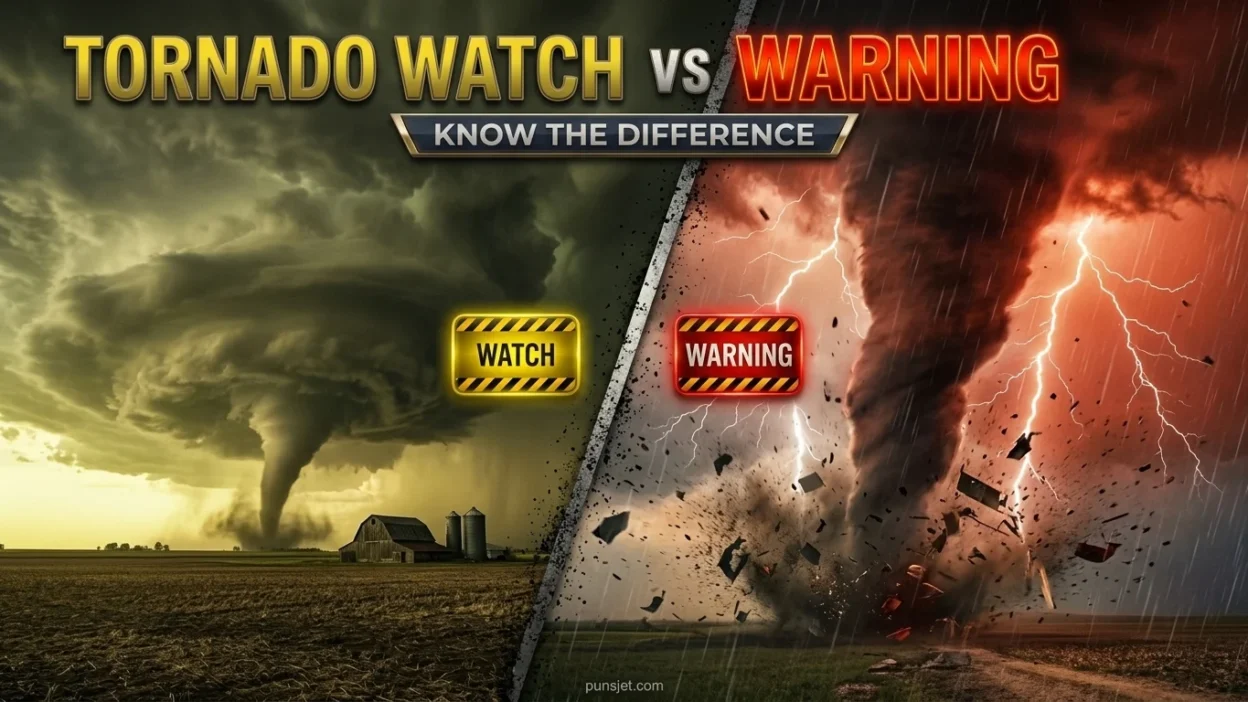
A tornado can develop quickly and cause serious damage to homes, buildings, and communities. Knowing the difference between a tornado watch and a tornado warning can help you make safer decisions when severe weather approaches. Although these two terms sound similar, they have different meanings. A tornado watch means conditions are favorable for tornadoes to form, while a tornado warning means a tornado has been spotted or indicated by weather radar.
Understanding these alerts is important for everyone, whether you are at home, at school, at work, or traveling. A watch is the time to prepare and stay informed. A warning means you should take shelter immediately. You do not need to wait until you see a tornado to protect yourself. Weather alerts can change quickly, so it is important to follow official instructions from local weather authorities. By learning what each alert means, how to respond, and which mistakes to avoid, you can be better prepared when dangerous weather threatens your area.
Quick Answer: Tornado Watch vs Warning
A tornado watch means weather conditions are favorable for tornadoes to develop in the watch area. Stay alert, review your safety plan, and prepare to take shelter. A tornado warning means a tornado has been detected by radar or reported by observers. Take shelter immediately in a sturdy building’s lowest level, away from windows.
Why Do People Confuse Tornado Watches and Warnings?
People often confuse these terms because both are issued when tornadoes are a concern. They also sound similar and are sometimes announced close together during severe storms.
However, the main difference is the level of immediate danger.
- Watch: A tornado is possible. Prepare for dangerous weather.
- Warning: A tornado has been detected or reported, or there is strong evidence of one. Take shelter immediately.
A watch does not mean a tornado will definitely form. Likewise, a warning does not mean every person in the affected area will see a tornado. It means the threat is serious enough to require immediate protective action.
What Is a Tornado Watch?
A tornado watch is an alert that tells people tornadoes are possible because weather conditions are favorable for them to develop. In the United States, the National Weather Service issues these watches for specific areas where dangerous storms may occur.
During a watch, a tornado may not have formed yet. However, storms could develop or become strong enough to produce tornadoes.
What Should You Do During a Tornado Watch?
Use a watch as an opportunity to prepare before conditions become more dangerous.
- Monitor official weather alerts and local forecasts.
- Identify a safe shelter in advance.
- Keep your phone charged and emergency alerts enabled.
- Prepare a flashlight, drinking water, essential medicines, and a first-aid kit.
- Make sure children and other household members know where to go.
- Avoid unnecessary travel if severe storms are approaching.
A tornado watch can cover a large area and may last for several hours. Conditions can change during that time, so continue checking reliable weather updates.
What Is a Tornado Warning?
A tornado warning is an alert that means a tornado has been detected by weather radar or reported by trained observers or other reliable sources. It indicates an immediate threat that requires protective action.
A warning generally applies to a smaller, more specific area than a watch, although the exact size and duration can vary. A tornado may already be on the ground, or a radar-indicated tornado may pose an imminent danger.
What Should You Do During a Tornado Warning?
Do not wait to see a tornado. Move to shelter immediately.
- Go to a basement if one is available.
- If there is no basement, use a small interior room on the lowest floor of a sturdy building.
- Stay away from windows, glass doors, and outside walls.
- Protect your head and neck with your arms, a helmet, or a thick blanket if available.
- If you are in a school, office, or public building, follow its emergency plan.
- Keep listening for official updates until the warning expires or authorities provide new instructions.
If you are outside, enter a sturdy building as quickly as possible. If you are driving, do not try to outrun a tornado. Seek a substantial building for shelter if you can do so safely.
Tornado Watch vs Warning: Comparison Table
| Feature | Tornado Watch | Tornado Warning |
|---|---|---|
| Meaning | Tornadoes are possible | A tornado has been detected or reported, or radar indicates one |
| Level of urgency | Prepare and stay alert | Take shelter immediately |
| Main purpose | Give people time to prepare | Protect people from an immediate threat |
| Typical coverage | Often a large area | Usually a more specific area |
| What to do | Check alerts and prepare shelter | Move to a safe shelter right away |
| Does it confirm a tornado? | No | It signals a detected, reported, or radar-indicated threat |
| Can conditions change? | Yes, the threat may increase or decrease | Yes, follow updates from weather authorities |
The simplest way to remember the difference is this: a watch means get ready; a warning means take cover. Always follow the instructions in your local alert because exact conditions and risks can differ.
When Should You Respond to Each Alert?
Knowing what action to take is just as important as understanding the definitions.
When a Tornado Watch Is Issued
Prepare for the possibility of a tornado. Check where the watch applies, identify your nearest safe room, and keep your phone or weather radio nearby. If a warning is issued, you should already know where to go.
For example, if forecasters issue a watch for your county in the afternoon, you should review your safety plan before evening storms arrive.
When a Tornado Warning Is Issued
Stop your normal activities and take shelter immediately. Do not spend time gathering belongings or standing outside to look at the sky.
For example, if a warning is issued while you are watching television at home, move to your basement or an interior room on the lowest floor. Take your phone with you if it is within reach.
What If You Are Sleeping When a Warning Is Issued?
Keep emergency alerts enabled on your phone when possible. A weather radio with an alert feature can provide another way to receive warnings, especially if your phone battery is low or mobile service is interrupted.
12 Examples of Tornado Watches and Warnings
These examples show how the two alerts apply to everyday situations.
- A watch before a storm: Weather officials expect conditions that could produce tornadoes later in the day. You prepare your emergency supplies.
- A warning from radar: Radar indicates a possible tornado near your town. You move to shelter immediately.
- A watch at school: Teachers review the school’s severe-weather plan and identify safe rooms.
- A warning during class: Students move to the designated shelter area and stay away from windows.
- A watch at home: Your family charges phones and checks the local forecast.
- A warning at home: Everyone moves to the basement or a small interior room on the lowest floor.
- A watch during work: Employees learn where the building’s emergency shelter is located.
- A warning during work: Staff and visitors follow the building’s emergency procedures immediately.
- A watch while traveling: You check the forecast and consider changing your travel plans.
- A warning while driving: You seek a substantial building for shelter if one is safely accessible.
- A watch overnight: Your household keeps alert notifications active and prepares for possible warnings.
- A warning in a mobile home: You move to a designated sturdy shelter or nearby substantial building as quickly as possible. A mobile home is not a safe place to remain during a tornado warning.
These examples demonstrate that a watch is the time to prepare, while a warning calls for immediate protective action.
Common Mistakes People Make
Even people who understand severe weather may misunderstand tornado alerts. Avoid these common mistakes.
1. Treating a Watch Like a Warning
A watch does not usually mean you must immediately take shelter, but it does mean you should prepare. Do not ignore it simply because no tornado has appeared.
2. Waiting to See a Tornado
A tornado can be hidden by rain, darkness, or dust. You should not wait for visual confirmation before taking shelter during a warning.
3. Assuming a Warning Means a Tornado Is Visible
A warning can be based on radar indications or reliable reports. A tornado does not have to be visible to create a serious threat.
4. Staying Near Windows
Windows can break during severe weather, sending glass and debris into a room. Choose an interior shelter away from windows.
5. Thinking a Watch Means a Tornado Is Certain
A watch means conditions are favorable for tornadoes, not that one will definitely form in your location.
6. Ignoring Updated Alerts
Warnings may be extended, canceled, or replaced as conditions change. Continue monitoring official information and follow new instructions.
Memory Trick: How to Remember the Difference
Use this simple memory trick:
- Watch = Watch the weather and get ready.
- Warning = Warning of immediate danger; take shelter.
You can also think of a watch as preparation time and a warning as action time.
Remember that the word watch does not mean you should stand outside and watch a storm. It means you should stay alert to the possibility of dangerous weather.
American vs British English
The terms tornado watch and tornado warning are especially common in American weather reports, where the National Weather Service uses them as distinct alert categories.
British English often uses the word tornado too, but weather communications may describe the risk through broader severe-weather warnings or local alert systems. The exact terminology depends on the country’s weather service.
The difference between watch and warning explained in this article follows the United States alert system. If you live elsewhere, follow the official weather alerts and emergency guidance used in your country.
Similar Weather Alert Words
Tornado alerts are part of a wider system of severe-weather information. Understanding these related terms can make weather reports easier to follow.
- Severe thunderstorm watch: Conditions are favorable for severe thunderstorms in the specified area.
- Severe thunderstorm warning: A severe thunderstorm has been detected or reported, or radar indicates that one is occurring.
- Flash flood watch: Conditions are favorable for flash flooding.
- Flash flood warning: Flash flooding is occurring or expected soon, and immediate action may be needed.
- Tornado emergency: In the United States, this is an exceptionally serious alert used in certain situations involving a confirmed, particularly dangerous tornado threat and a significant risk to life.
These alerts describe different hazards, so do not assume that every weather watch or warning requires the same response. Read the alert carefully and follow its specific safety instructions.
FAQs:
1. Is a tornado watch or warning more serious?
A tornado warning requires more immediate action. A watch means tornadoes are possible, while a warning indicates a detected, reported, or radar-indicated tornado threat. Prepare during a watch and take shelter immediately during a warning.
2. Does a tornado watch mean a tornado is coming?
No. A tornado watch means conditions are favorable for tornadoes to develop in the specified area. A tornado may form, but it is not guaranteed. Stay alert and be ready to take shelter if a warning is issued.
3. What should I do first during a tornado warning?
Move immediately to a basement or a small interior room on the lowest floor of a sturdy building. Stay away from windows and protect your head and neck. Follow official instructions and remain sheltered until it is safe.
4. Can a tornado warning happen without a tornado being visible?
Yes. A warning may be issued when weather radar indicates a tornado or when reliable observers report one. Rain, darkness, and dust can also make tornadoes difficult to see, so never rely only on visual signs.
5. How long does a tornado watch last?
A tornado watch often lasts for several hours, but its duration varies with weather conditions. Check the official alert for its expiration time and monitor updates because the watch may be extended, canceled, or replaced.
6. Can a tornado watch turn into a tornado warning?
Yes. If a tornado develops or radar and reports indicate a tornado threat, authorities may issue a warning for the affected area. This is why you should prepare during a watch instead of waiting until dangerous weather arrives.
7. Where is the safest place during a tornado warning?
A basement is generally a good option. If you do not have one, use a small interior room on the lowest floor of a sturdy building, away from windows and exterior walls. Avoid mobile homes and seek a designated sturdy shelter.
8. Should I leave my home during a tornado watch?
Usually, a watch alone does not require evacuation. Stay informed, prepare your shelter, and follow local instructions. If you live in a mobile home or another unsafe structure, identify a nearby sturdy shelter before a warning is issued.
Remember This
- Tornado watch: Tornadoes are possible. Prepare and stay informed.
- Tornado warning: A tornado has been detected, reported, or indicated by radar. Take shelter immediately.
- During either alert: Monitor official updates and follow local safety instructions.
The most important rule is simple: get ready during a watch and take cover during a warning.
Conclusion
Understanding tornado watch vs warning can help you respond calmly when dangerous weather approaches. A watch gives you time to prepare because tornadoes are possible, while a warning signals a more immediate threat that requires shelter. Learning the difference before severe weather occurs can help you avoid confusion when every minute matters.
Stay aware of local weather alerts, know where your safest shelter is, and make sure everyone in your household understands the plan. Do not wait to see a tornado before protecting yourself. When a warning is issued, take shelter immediately and follow instructions from official weather and emergency authorities.

Emily Margaret is a writer and humor enthusiast at PunsJet.com. She enjoys creating clever puns and lighthearted content that entertains readers and adds a spark of humor to everyday life. With a love for wordplay and creativity, Emily aims to share fun, relatable jokes that make people smile and laugh.