
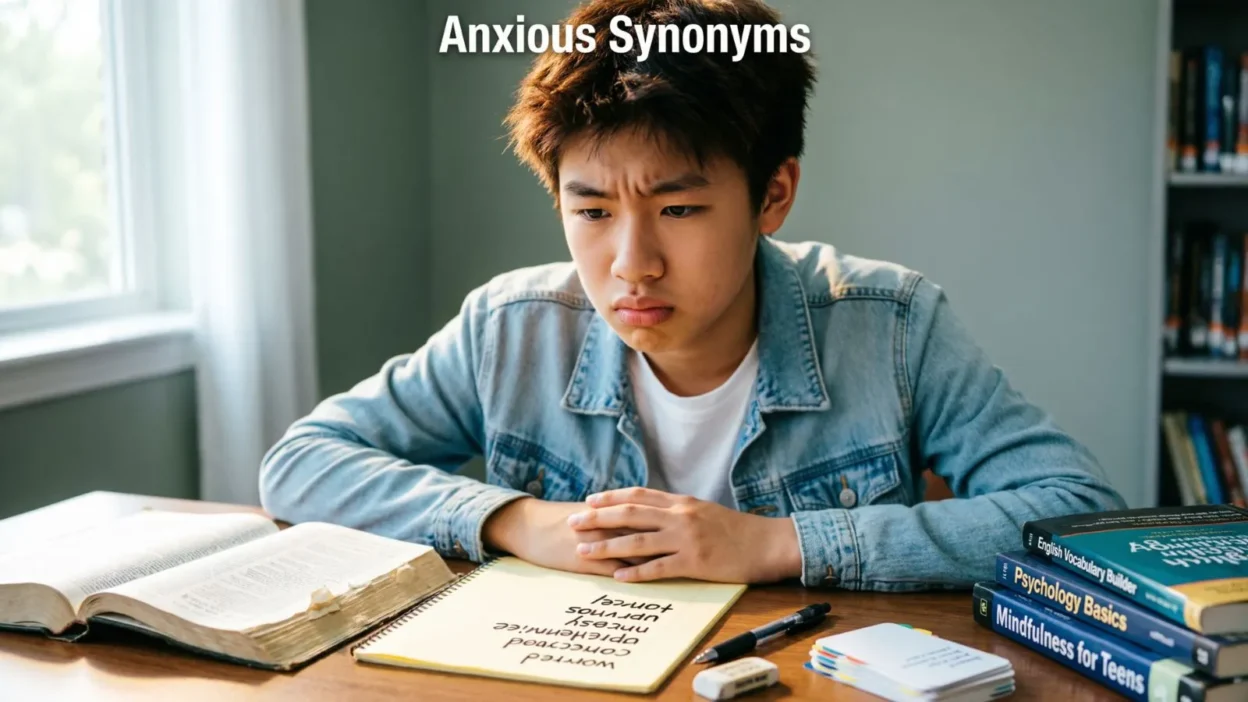
Many examples of Anxious Synonyms describe the emotions people feel before an important event, helping readers understand uncertainty and emotional reactions better.
It is normal to feel anxious or become anxious about a school performance, sports event, or play. This feeling often develops when people are unsure what may happen next.
From my experience, even confident individuals can experience uncomfortable feelings when facing something new or challenging.
A common situation involves students waiting for scheduled tryouts. The following day may feel stressful because they spend the entire day thinking about the outcome.
Their body language might be showing uncertainty, while their expressions are showing nervous feelings. This reaction is natural and often occurs when people feel unsure about their performance.
Feeling uncomfortable before tryouts or any scheduled activity is not always a negative sign.
These emotions usually reflect normal concern about the future. Learning to manage uncertainty can make the following experience feel less overwhelming and more manageable.
What Does “Anxious” Mean?
Anxious means feeling worried, nervous, uneasy, or concerned about something uncertain or important.
Simple Definition
A person is anxious when they are thinking about a possible problem, challenge, or outcome and feel nervous about it.
Examples
- She felt anxious before her job interview.
- The students were anxious about their exam results.
- He became anxious when he didn’t hear from his family.
30 Anxious Synonyms
1. Worried
Meaning: Thinking about possible problems.
Example Sentence: She was worried about her test score.
Best Usage Context: Everyday conversations.
2. Nervous
Meaning: Feeling uneasy or tense.
Example Sentence: I felt nervous before speaking on stage.
Best Usage Context: Public speaking, interviews, presentations.
3. Concerned
Meaning: Caring and worrying about something.
Example Sentence: Parents were concerned about their child’s health.
Best Usage Context: Professional or polite situations.
4. Uneasy
Meaning: Slightly uncomfortable or worried.
Example Sentence: He felt uneasy walking alone at night.
Best Usage Context: Mild anxiety.
5. Apprehensive
Meaning: Worried that something bad may happen.
Example Sentence: She was apprehensive about moving to a new city.
Best Usage Context: Formal writing.
6. Tense
Meaning: Unable to relax because of stress.
Example Sentence: Everyone felt tense before the announcement.
Best Usage Context: Stressful situations.
7. Fearful
Meaning: Feeling afraid.
Example Sentence: The child was fearful of the dark.
Best Usage Context: Strong anxiety or fear.
8. Restless
Meaning: Unable to stay calm or still.
Example Sentence: He became restless while waiting for news.
Best Usage Context: Waiting situations.
9. Distressed
Meaning: Very upset and worried.
Example Sentence: She looked distressed after hearing the report.
Best Usage Context: Emotional situations.
10. Agitated
Meaning: Nervous and upset.
Example Sentence: The crowd became agitated during the delay.
Best Usage Context: Emotional tension.
11. Troubled
Meaning: Mentally worried.
Example Sentence: He seemed troubled by the decision.
Best Usage Context: Personal concerns.
12. Alarmed
Meaning: Suddenly worried or frightened.
Example Sentence: Residents were alarmed by the warning.
Best Usage Context: Unexpected situations.
13. Panicky
Meaning: Close to panic.
Example Sentence: She felt panicky before the surgery.
Best Usage Context: High stress.
14. Jittery
Meaning: Extremely nervous.
Example Sentence: I was jittery before my driving test.
Best Usage Context: Informal conversation.
15. Edgy
Meaning: Easily irritated due to worry.
Example Sentence: He seemed edgy all day.
Best Usage Context: Casual speech.
16. Overwhelmed
Meaning: Feeling unable to cope.
Example Sentence: She felt overwhelmed by responsibilities.
Best Usage Context: Work or study pressure.
17. Fretful
Meaning: Constantly worrying.
Example Sentence: The fretful mother checked her phone repeatedly.
Best Usage Context: Ongoing concerns.
18. Perturbed
Meaning: Disturbed or worried.
Example Sentence: He looked perturbed by the unexpected question.
Best Usage Context: Formal writing.
19. Disturbed
Meaning: Emotionally unsettled.
Example Sentence: She was disturbed by the news report.
Best Usage Context: Emotional reactions.
20. Insecure
Meaning: Lacking confidence.
Example Sentence: He felt insecure about his abilities.
Best Usage Context: Self-confidence issues.
21. Frightened
Meaning: Feeling scared.
Example Sentence: The child was frightened by the loud noise.
Best Usage Context: Fear-based situations.
22. Afraid
Meaning: Experiencing fear.
Example Sentence: She was afraid of making mistakes.
Best Usage Context: General fear.
23. Concern-ridden
Meaning: Filled with worries.
Example Sentence: He looked concern-ridden before the meeting.
Best Usage Context: Descriptive writing.
24. Suspicious
Meaning: Feeling uncertain or doubtful.
Example Sentence: She became suspicious of the unusual behavior.
Best Usage Context: Trust-related concerns.
25. Expectant
Meaning: Nervously waiting for something.
Example Sentence: The audience sat expectant before the show.
Best Usage Context: Positive anticipation.
26. Antsy
Meaning: Impatient and nervous.
Example Sentence: The kids became antsy during the long trip.
Best Usage Context: Informal speech.
27. Stressful
Meaning: Full of stress and worry.
Example Sentence: Exam week can be stressful.
Best Usage Context: Describing situations.
28. Troubled-minded
Meaning: Mentally burdened.
Example Sentence: He appeared troubled-minded after the discussion.
Best Usage Context: Literary writing.
29. Cautious
Meaning: Careful because of concern.
Example Sentence: Investors remained cautious about the market.
Best Usage Context: Business and decision-making.
30. Anxious
Meaning: Worried or nervous about something uncertain.
Example Sentence: She felt anxious about the future.
Best Usage Context: General use.
Comparison Table: When to Use Different Anxious Synonyms
| Synonym | Strength | Best Situation |
|---|---|---|
| Worried | Mild | Everyday concerns |
| Nervous | Medium | Interviews, speeches |
| Concerned | Mild | Professional discussions |
| Apprehensive | Medium | Future uncertainty |
| Fearful | Strong | Dangerous situations |
| Panicky | Very Strong | Extreme stress |
| Restless | Medium | Waiting periods |
| Tense | Medium | High-pressure events |
| Agitated | Strong | Emotional conflict |
| Expectant | Mild Positive | Exciting anticipation |
How to Choose the Right Synonym
For Everyday Worry
Use:
- Worried
- Concerned
- Uneasy
- Troubled
These words sound natural in daily conversations.
For Nervous Situations
Use:
- Nervous
- Jittery
- Apprehensive
- Tense
These fit interviews, presentations, and exams.
For Strong Fear
Use:
- Fearful
- Frightened
- Panicky
- Alarmed
These express serious anxiety or fear.
For Emotional Stress
Use:
- Distressed
- Agitated
- Overwhelmed
- Perturbed
These describe stronger emotional reactions.
For Positive Anticipation
Use:
- Expectant
- Excited
- Eager
These suggest hopeful anticipation rather than pure worry.
Common Mistakes When Using Anxious Synonyms
Using “fearful” for small worries
Incorrect:
- I was fearful about sending an email.
Better:
- I was nervous about sending an email.
Using “panicky” too often
Panicky suggests extreme stress, not normal nervousness.
Using formal words in casual conversations
Words like perturbed and apprehensive are better for formal writing than everyday speech.
Why Learning Anxious Synonyms Matters
Expanding your vocabulary helps you:
- Write more naturally
- Avoid repeating the same words
- Improve essays and assignments
- Create stronger content
- Express emotions more accurately
- Sound more fluent in English
Students, writers, bloggers, and ESL learners can all benefit from understanding the subtle differences between anxious synonyms.
Conclusion
Learning anxious synonyms helps you express worry, nervousness, fear, and anticipation with greater accuracy.
While anxious is a useful general term, alternatives like worried, nervous, apprehensive, fearful, and restless can better match specific situations.
By understanding each synonym’s meaning, example usage, and tone, you can improve your vocabulary, strengthen your writing, and communicate your thoughts more effectively.
The next time you feel anxious, you’ll have plenty of alternative words to choose from depending on exactly how you feel.