
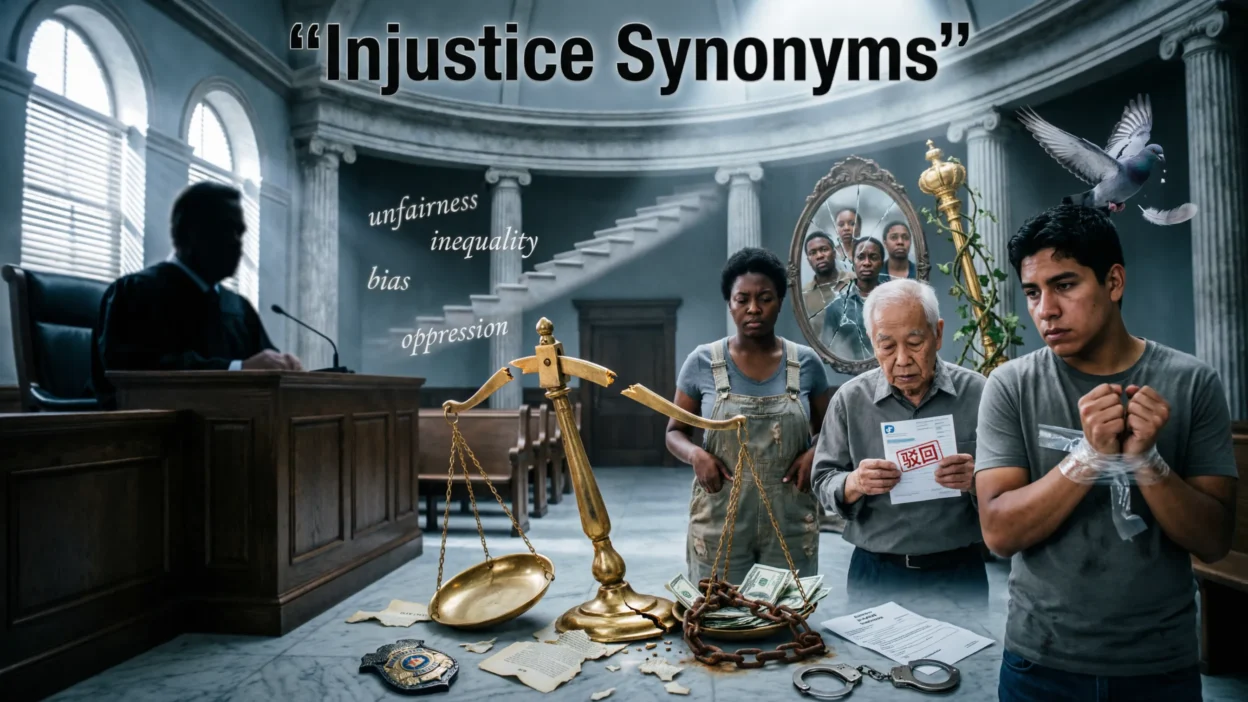
Words shape how we express emotions, opinions, and experiences. One important word many writers and students search for is “injustice.”
Understanding injustice synonyms can help you communicate unfair situations more clearly and professionally.
If you are writing an essay, creating content, improving English vocabulary, or simply learning better word choices, knowing multiple synonyms for injustice is extremely useful.
Different words can express different levels of unfairness, cruelty, discrimination, or corruption.
This guide explains the meaning of injustice in simple English and provides 30 useful injustice synonyms with meanings, examples, and usage tips.
The article is designed for ESL learners, students, writers, and bloggers who want beginner-friendly vocabulary help.
What Does “Injustice” Mean?
Injustice means a situation that is unfair, unequal, or morally wrong. It usually happens when people are treated badly or denied fairness, rights, or equality.
Simple Definition:
Injustice = unfair treatment or lack of justice.
Example:
- Many people protested against social injustice in their community.
Injustice can appear in many forms:
- Social injustice
- Legal injustice
- Workplace injustice
- Economic inequality
- Discrimination
- Abuse of power
30 Best Injustice Synonyms
Below are useful injustice synonyms with meanings, examples, and the best situations to use them.
1. Unfairness
Meaning: Lack of fairness or equal treatment.
Example: The students complained about the unfairness of the grading system.
Best Usage Context: Everyday conversations and academic writing.
2. Inequality
Meaning: An unfair difference between groups or people.
Example: Economic inequality affects millions of families.
Best Usage Context: Social and political discussions.
3. Bias
Meaning: Unfair preference for one side or person.
Example: The manager showed bias toward experienced workers.
Best Usage Context: Workplace and media discussions.
4. Discrimination
Meaning: Treating people unfairly because of race, gender, age, or religion.
Example: Discrimination in hiring is illegal.
Best Usage Context: Legal and social justice topics.
5. Oppression
Meaning: Harsh and unfair treatment by powerful people or systems.
Example: The people suffered years of oppression.
Best Usage Context: Historical and political writing.
6. Prejudice
Meaning: Negative opinion without proper knowledge.
Example: Prejudice can divide communities.
Best Usage Context: Social and cultural discussions.
7. Exploitation
Meaning: Using someone unfairly for personal gain.
Example: Child labor is a form of exploitation.
Best Usage Context: Human rights topics.
8. Corruption
Meaning: Dishonest or illegal behavior by people in power.
Example: Government corruption damaged public trust.
Best Usage Context: Politics and law.
9. Tyranny
Meaning: Cruel and unfair control by a ruler or authority.
Example: Citizens fought against tyranny.
Best Usage Context: Historical and dramatic writing.
10. Partiality
Meaning: Favoring one side unfairly.
Example: The judge was accused of partiality.
Best Usage Context: Formal writing.
11. Favoritism
Meaning: Giving unfair advantages to certain people.
Example: Favoritism in the office upset employees.
Best Usage Context: Workplace situations.
12. Wrongdoing
Meaning: Bad or illegal behavior.
Example: The company admitted its wrongdoing.
Best Usage Context: Legal and formal contexts.
13. Abuse
Meaning: Harmful or cruel treatment.
Example: The report exposed abuse of power.
Best Usage Context: Serious social issues.
14. Cruelty
Meaning: Intentional pain or suffering caused to others.
Example: Animal cruelty is punishable by law.
Best Usage Context: Emotional or legal discussions.
15. Victimization
Meaning: Treating someone unfairly and making them suffer.
Example: Workers reported victimization by management.
Best Usage Context: Workplace or legal issues.
16. Dishonesty
Meaning: Lack of honesty or truthfulness.
Example: Dishonesty in business can ruin reputations.
Best Usage Context: Personal and professional writing.
17. Lawlessness
Meaning: Lack of respect for laws and rules.
Example: The city experienced growing lawlessness.
Best Usage Context: Crime and political topics.
18. Misconduct
Meaning: Improper or unacceptable behavior.
Example: The officer was punished for misconduct.
Best Usage Context: Professional and legal settings.
19. Brutality
Meaning: Extreme violence or cruelty.
Example: The documentary exposed police brutality.
Best Usage Context: Serious social discussions.
20. Deception
Meaning: Misleading or tricking someone unfairly.
Example: Customers were angry about the deception.
Best Usage Context: Business and relationships.
21. Inequity
Meaning: Lack of fairness or justice.
Example: Healthcare inequity affects poor communities.
Best Usage Context: Formal and academic writing.
22. Maltreatment
Meaning: Bad or harmful treatment.
Example: The investigation revealed prisoner maltreatment.
Best Usage Context: Human rights discussions.
23. Bigotry
Meaning: Strong unfair hatred toward certain groups.
Example: Society must fight against bigotry.
Best Usage Context: Social justice topics.
24. Despotism
Meaning: Harsh control by a ruler with absolute power.
Example: Citizens protested against despotism.
Best Usage Context: Political history.
25. Persecution
Meaning: Repeated unfair treatment because of beliefs or identity.
Example: Many people fled religious persecution.
Best Usage Context: Historical and human rights topics.
26. Fraud
Meaning: Intentional deception for money or benefit.
Example: The businessman was arrested for fraud.
Best Usage Context: Financial and legal discussions.
27. Neglect
Meaning: Failure to care for someone properly.
Example: Child neglect is a serious issue.
Best Usage Context: Healthcare and family discussions.
28. Inhumanity
Meaning: Extreme cruelty or lack of compassion.
Example: The war showed shocking inhumanity.
Best Usage Context: Emotional and historical writing.
29. Unreasonableness
Meaning: Acting unfairly or without logic.
Example: Customers complained about the unreasonableness of the policy.
Best Usage Context: Everyday and business writing.
30. Misrule
Meaning: Poor and unfair government leadership.
Example: The nation suffered under years of misrule.
Best Usage Context: Political analysis.
Quick Comparison Table of Injustice Synonyms
| Synonym | Main Meaning | Best Context |
|---|---|---|
| Unfairness | Lack of fairness | Everyday use |
| Inequality | Unequal treatment | Social issues |
| Discrimination | Unfair treatment of groups | Legal/social |
| Oppression | Cruel control | Politics/history |
| Bias | Unfair preference | Workplace/media |
| Corruption | Dishonest power use | Government/business |
| Exploitation | Using others unfairly | Human rights |
| Tyranny | Cruel leadership | Historical writing |
| Bigotry | Intolerance toward groups | Social justice |
| Fraud | Intentional deception | Financial/legal |
How to Choose the Right Injustice Synonym
Different injustice synonyms work better in different situations. Here is a simple guide to help you choose the correct word.
For Social Problems
Use:
- Inequality
- Discrimination
- Oppression
- Bigotry
These words are best for discussions about society, race, gender, or human rights.
For Workplace Situations
Use:
- Bias
- Favoritism
- Victimization
- Misconduct
These are common in professional and office-related writing.
For Government or Politics
Use:
- Corruption
- Tyranny
- Despotism
- Misrule
These words describe abuse of political power.
For Legal or Criminal Topics
Use:
- Fraud
- Wrongdoing
- Abuse
- Lawlessness
These are suitable for formal or legal discussions.
For Emotional or Serious Writing
Use:
- Cruelty
- Inhumanity
- Brutality
- Persecution
These words carry stronger emotional impact.
Why Learning Injustice Synonyms Matters
Expanding your vocabulary helps you:
- Write more clearly
- Avoid repeating the same word
- Sound more professional
- Improve essays and articles
- Express emotions accurately
- Understand books and media better
For ESL learners, learning synonyms also improves speaking confidence and reading comprehension.
Common Mistakes When Using Injustice Synonyms
1. Using Strong Words Too Casually
Words like “tyranny” or “brutality” are very serious. Avoid using them for small everyday problems.
2. Confusing Bias and Discrimination
- Bias = unfair opinion
- Discrimination = unfair action
3. Using Formal Words in Casual Conversations
Words like “inequity” and “despotism” sound formal and are better for academic writing.
Final Thoughts
Learning injustice synonyms can improve your vocabulary, writing skills, and communication.
Each synonym has a slightly different tone and meaning, so choosing the right one helps make your message clearer and stronger.
Some words focus on unfair treatment, while others describe corruption, cruelty, or abuse of power.
By understanding these differences, students, writers, and ESL learners can express ideas more naturally and effectively.
Use this guide as a vocabulary reference whenever you need a better alternative to “injustice” in essays, blogs, stories, or conversations.