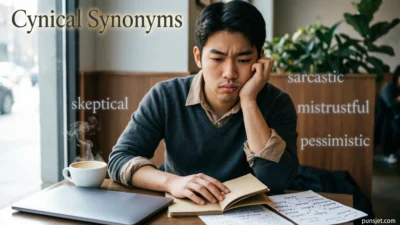
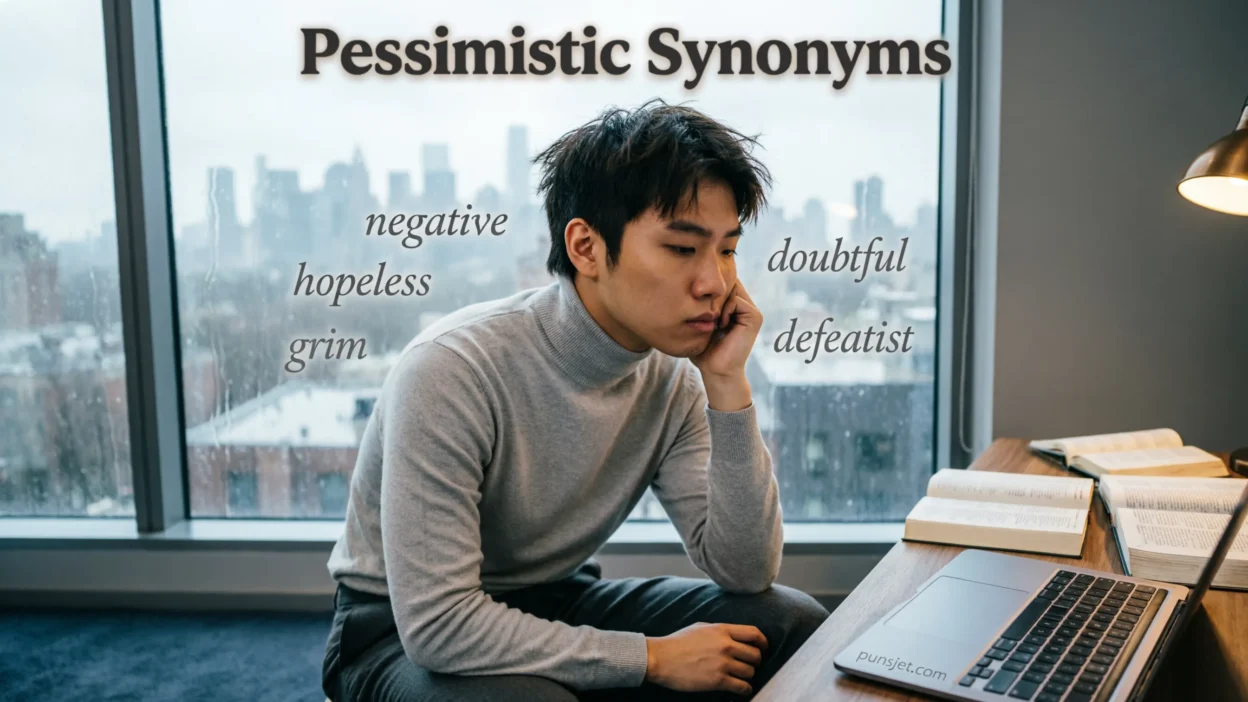
When someone always expects the worst outcome, they are often called pessimistic.
Learning different pessimistic synonyms can improve your writing, speaking, and vocabulary skills.
If you are a student, ESL learner, writer, or content creator, understanding these words helps you express emotions and attitudes more clearly.
Many English words have similar meanings, but each synonym carries a slightly different tone. Some words sound formal, while others feel emotional, dramatic, or conversational.
Knowing these differences helps you choose the right word in the right situation.
In this guide, you’ll learn the meaning of pessimistic, discover 30 useful synonyms, explore example sentences, and understand when to use each one naturally.
What Does “Pessimistic” Mean?
The word pessimistic describes a person who expects bad things to happen or focuses more on problems than positive outcomes.
Simple Meaning:
A pessimistic person usually believes that situations will end badly.
Example:
- She was pessimistic about passing the exam because she did not study enough.
Common Usage Context:
- Daily conversations
- Academic writing
- Personality descriptions
- Emotional storytelling
- Business or political discussions
30 Best Pessimistic Synonyms
1. Negative
Meaning: Focused on bad outcomes or problems.
Example Sentence:
- He always has a negative attitude during meetings.
Best Usage Context:
General conversations and personality descriptions.
2. Gloomy
Meaning: Feeling sad, dark, or hopeless.
Example Sentence:
- The weather made everyone feel gloomy.
Best Usage Context:
Emotional or mood-related writing.
3. Cynical
Meaning: Believing people are selfish or dishonest.
Example Sentence:
- She became cynical after years of disappointment.
Best Usage Context:
Social commentary or character analysis.
4. Defeatist
Meaning: Expecting failure before trying.
Example Sentence:
- His defeatist attitude hurt team morale.
Best Usage Context:
Motivational or workplace discussions.
5. Hopeless
Meaning: Feeling there is no chance of success.
Example Sentence:
- They felt hopeless after losing the game.
Best Usage Context:
Strong emotional situations.
6. Doubtful
Meaning: Unsure or lacking confidence.
Example Sentence:
- I am doubtful that the plan will work.
Best Usage Context:
Formal and casual communication.
7. Discouraged
Meaning: Feeling less confident or hopeful.
Example Sentence:
- She felt discouraged after hearing the results.
Best Usage Context:
Personal struggles and emotional writing.
8. Bleak
Meaning: Without hope or positivity.
Example Sentence:
- The future looked bleak for the company.
Best Usage Context:
Serious discussions and news writing.
9. Fatalistic
Meaning: Believing bad events cannot be avoided.
Example Sentence:
- He had a fatalistic view of life.
Best Usage Context:
Philosophical or deep discussions.
10. Melancholy
Meaning: Deeply sad or thoughtful.
Example Sentence:
- Her melancholy mood lasted for days.
Best Usage Context:
Creative and literary writing.
11. Despairing
Meaning: Showing complete loss of hope.
Example Sentence:
- The crowd sounded despairing after the announcement.
Best Usage Context:
Emotional storytelling.
12. Somber
Meaning: Serious and sad in tone.
Example Sentence:
- The room became somber after the news.
Best Usage Context:
Formal and emotional situations.
13. Miserable
Meaning: Extremely unhappy.
Example Sentence:
- He felt miserable during the storm.
Best Usage Context:
Daily conversation and emotional writing.
14. Downbeat
Meaning: Slightly sad or lacking enthusiasm.
Example Sentence:
- Her speech had a downbeat tone.
Best Usage Context:
Media and conversational English.
15. Grim
Meaning: Harsh, serious, or depressing.
Example Sentence:
- The report presented a grim future.
Best Usage Context:
News, reports, and serious topics.
16. Morbid
Meaning: Too focused on death or dark subjects.
Example Sentence:
- His morbid jokes made people uncomfortable.
Best Usage Context:
Psychological or dramatic writing.
17. Skeptical
Meaning: Doubting something is true or successful.
Example Sentence:
- She was skeptical about the new policy.
Best Usage Context:
Academic and professional discussions.
18. Pessimistical
Meaning: Another form of pessimistic.
Example Sentence:
- His pessimistical comments annoyed everyone.
Best Usage Context:
Formal or old-fashioned writing.
19. Uncertain
Meaning: Not feeling sure about the future.
Example Sentence:
- They felt uncertain about the decision.
Best Usage Context:
Business and personal communication.
20. Glum
Meaning: Quietly sad or disappointed.
Example Sentence:
- He looked glum after the interview.
Best Usage Context:
Informal and conversational English.
21. Blue
Meaning: Feeling sad or emotionally low.
Example Sentence:
- I felt blue on rainy days.
Best Usage Context:
Casual speech and storytelling.
22. Joyless
Meaning: Without happiness or pleasure.
Example Sentence:
- The office felt joyless and quiet.
Best Usage Context:
Descriptive writing.
23. Heartbroken
Meaning: Extremely sad because of loss or disappointment.
Example Sentence:
- She was heartbroken after the breakup.
Best Usage Context:
Emotional and relationship-related writing.
24. Dejected
Meaning: Feeling sad and disappointed.
Example Sentence:
- The players looked dejected after losing.
Best Usage Context:
Sports and emotional contexts.
25. Mournful
Meaning: Full of sadness or grief.
Example Sentence:
- The song had a mournful sound.
Best Usage Context:
Music, literature, and emotional descriptions.
26. Woeful
Meaning: Very bad, sad, or disappointing.
Example Sentence:
- Their performance was woeful.
Best Usage Context:
Critical or dramatic writing.
27. Resigned
Meaning: Accepting something unpleasant without fighting it.
Example Sentence:
- She sounded resigned to failure.
Best Usage Context:
Serious emotional discussions.
28. Concerned
Meaning: Worried about possible problems.
Example Sentence:
- Parents were concerned about safety issues.
Best Usage Context:
Everyday communication.
29. Dark
Meaning: Emotionally heavy or depressing.
Example Sentence:
- The movie had a dark atmosphere.
Best Usage Context:
Creative writing and reviews.
30. Dismal
Meaning: Very bad, depressing, or hopeless.
Example Sentence:
- Sales showed a dismal decline this year.
Best Usage Context:
Reports and descriptive writing.
Quick Comparison Table of Pessimistic Synonyms
| Synonym | Tone | Best For |
|---|---|---|
| Negative | Neutral | Daily conversation |
| Cynical | Sharp | Social opinions |
| Bleak | Serious | News and reports |
| Glum | Casual | Informal speaking |
| Fatalistic | Deep | Philosophy discussions |
| Skeptical | Professional | Academic writing |
| Miserable | Emotional | Personal feelings |
| Grim | Strong | Serious situations |
| Downbeat | Mild | Media and casual tone |
| Morbid | Dark | Dramatic writing |
How to Choose the Right Synonym
Choosing the right pessimistic synonym depends on tone, emotion, and context.
For Casual Conversations
Use:
- Negative
- Glum
- Blue
- Downbeat
These words sound natural in everyday English.
For Academic or Professional Writing
Use:
- Skeptical
- Doubtful
- Uncertain
- Cynical
These words feel more formal and precise.
For Emotional or Creative Writing
Use:
- Melancholy
- Despairing
- Heartbroken
- Mournful
These words create stronger emotional impact.
For Serious or Dark Situations
Use:
- Grim
- Bleak
- Fatalistic
- Morbid
These words express deep negativity or hopelessness.
Common Mistakes When Using Pessimistic Synonyms
1. Using Strong Words Too Often
Words like grim or hopeless can sound overly dramatic if used casually.
2. Confusing “Cynical” and “Skeptical”
- Skeptical means doubtful.
- Cynical means distrusting people’s motives.
3. Ignoring Tone
Some synonyms sound emotional while others sound professional. Always match the tone to your audience.
Why Learning Pessimistic Synonyms Matters
Expanding your vocabulary helps you:
- Write more naturally
- Avoid repeating the same words
- Express emotions more clearly
- Improve essays and creative writing
- Sound more fluent in English
Writers and students especially benefit from learning nuanced vocabulary because it adds depth and variety to communication.
Conclusion
Understanding pessimistic synonyms can greatly improve your English vocabulary and writing skills.
While all these words relate to negativity or doubt, each one carries its own emotional tone and usage style.
Some words like negative and doubtful work well in daily conversations, while others like bleak, grim, and fatalistic fit serious or emotional situations better.
By learning when and how to use these synonyms, you can communicate more clearly and naturally.
Keep practicing these words in sentences, conversations, and writing exercises to become more confident and expressive in English.