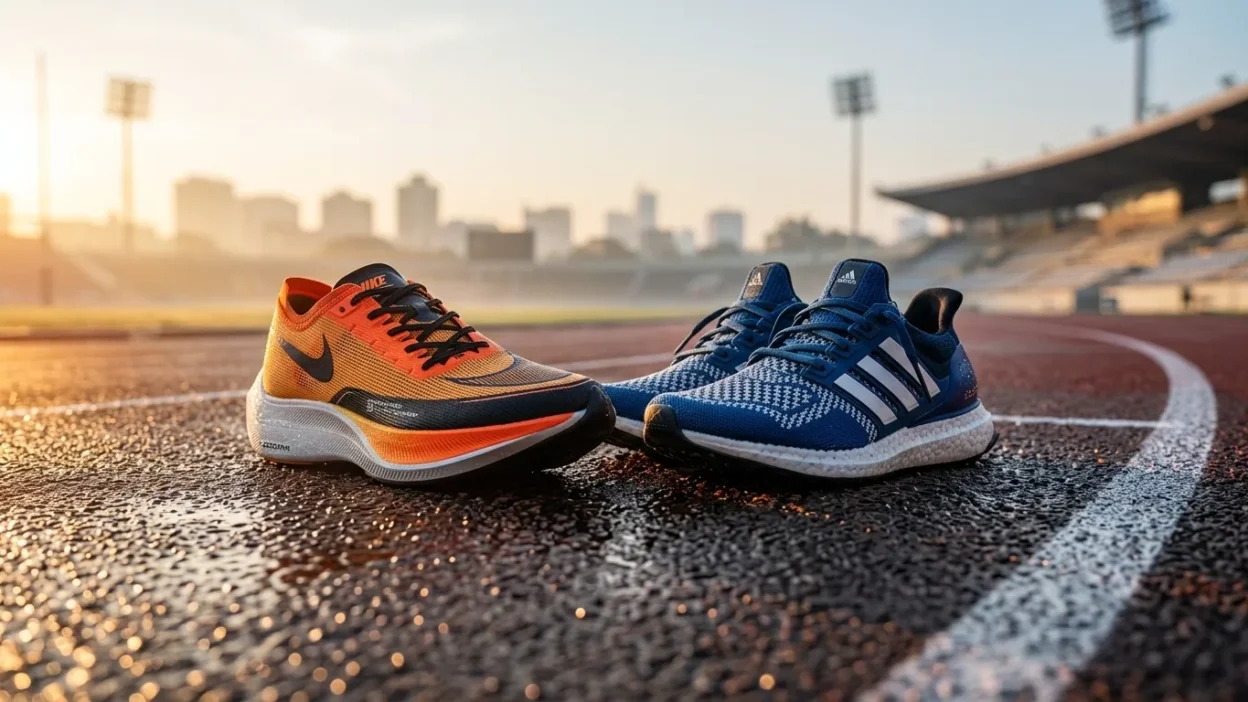
Nike vs Adidas running shoes is a common comparison for runners who want comfortable footwear, good performance, and value for money. Both brands make running shoes for beginners, daily runners, long-distance athletes, and people who enjoy walking. However, they use different shoe designs, cushioning systems, and fits, so the best choice depends on your feet and running goals.
Nike is known for its responsive running shoes, lightweight designs, and performance-focused models. Adidas is well known for its Boost and Lightstrike cushioning technologies, comfortable daily trainers, and competition-ready running shoes. Neither brand is automatically better for every runner. A shoe that feels excellent on one person’s feet may feel uncomfortable on someone else’s. Price, fit, durability, running distance, and personal preference all matter when choosing between them.
Quick Answer
Nike and Adidas both make excellent running shoes, but the better brand depends on your needs. Nike is worth considering for lightweight performance and responsive designs, while Adidas offers strong options for cushioning and everyday comfort. Compare specific models, check the fit, and choose the pair that feels best on your feet.
Why Do People Confuse Nike and Adidas Running Shoes?
People often compare Nike and Adidas because both brands sell shoes for similar activities, including daily jogging, road running, racing, and long-distance training.
Their product ranges also overlap. Both offer cushioned trainers for everyday use and lightweight models designed for faster running. Their prices vary widely, from more affordable entry-level shoes to premium racing models.
The main difference is not simply the brand name. It is how a particular shoe fits, cushions your feet, responds to your stride, and performs during your usual runs.
For example, a beginner who runs three kilometers a few times a week may prefer a comfortable daily trainer. A marathon runner may prioritize cushioning, weight, stability, and energy return. These runners can reasonably choose different brands.
Nike Running Shoes
Nike offers running shoes for many different needs, from everyday jogging to competitive racing. Its popular running shoe families include the Pegasus, Vomero, and Vaporfly ranges.
Nike Cushioning and Comfort
Nike uses different cushioning systems across its running shoes. ZoomX foam is designed for a lightweight, responsive feel, while ReactX foam is used in selected models to provide cushioning and energy return.
The experience depends on the shoe model. Some Nike shoes feel firm and fast, while others offer a softer ride for longer runs. It is important not to assume that every Nike shoe has the same level of comfort.
Advantages of Nike Running Shoes
- A wide range of shoes for beginners and experienced runners.
- Lightweight options for speed training and racing.
- Different cushioning levels for various running needs.
- Performance-focused designs for road running.
- Recognizable styles that can also suit casual wear.
Possible Disadvantages
- Some premium racing models can be expensive.
- Certain models may feel narrow to runners with wide feet.
- Lightweight racing shoes may not be ideal for every beginner.
- Comfort and durability can vary between models.
Who Should Choose Nike?
Nike is worth considering if you want a versatile daily trainer, a lightweight shoe for faster workouts, or a specialized racing shoe. Beginners should look at comfortable daily trainers before choosing a more advanced racing model.
Adidas Running Shoes
Adidas also offers a broad range of running shoes, including the Supernova, Ultraboost, and Adizero families. These models serve different purposes, from everyday training to competitive racing.
Adidas Cushioning and Comfort
Adidas uses technologies such as Boost, Lightstrike, and Lightstrike Pro in different shoe models. Boost is known for its cushioned feel, while Lightstrike technologies are designed to balance low weight, responsiveness, and performance.
The Adizero family includes shoes made for faster training and racing. Other Adidas models focus more on daily comfort, making the brand a useful option for runners with different goals.
Advantages of Adidas Running Shoes
- Several options for cushioned daily running.
- Lightweight performance shoes for speed and competition.
- Different designs for training and longer runs.
- A range of styles suitable for casual wear.
- Multiple cushioning technologies to compare.
Possible Disadvantages
- Premium Adizero racing shoes can be expensive.
- Some cushioned models may feel bulky to runners who prefer minimal shoes.
- Fit and toe-box space vary by model.
- Not every Adidas shoe is designed for serious running.
Who Should Choose Adidas?
Adidas is worth considering if you want a comfortable daily trainer, enjoy cushioned running shoes, or need a shoe for tempo runs and races. Compare individual models rather than assuming every Adidas shoe feels soft or bouncy.
Nike vs Adidas Running Shoes: Comparison Table
| Feature | Nike | Adidas |
|---|---|---|
| Best known for | Performance designs and responsive cushioning | Boost cushioning and Adizero performance shoes |
| Cushioning technologies | ZoomX, ReactX and others, depending on model | Boost, Lightstrike and Lightstrike Pro |
| Daily running | Pegasus and Vomero families | Supernova and selected Ultraboost models |
| Speed and racing | Vaporfly and Alphafly families | Adizero Adios Pro and other Adizero models |
| Comfort | Depends on fit and shoe design | Depends on fit and shoe design |
| Fit | Varies by model and width | Varies by model and width |
| Price | Budget-friendly to premium | Budget-friendly to premium |
| Best choice | The model that suits your running needs | The model that suits your running needs |
The main takeaway is that neither brand wins every category. The individual shoe’s design, fit, and intended use matter more than the logo.
When Should You Choose Nike or Adidas?
Your running habits can help you narrow down the choice.
1. For everyday running
Consider the Nike Pegasus or an Adidas Supernova model. Both brands have daily trainers designed for regular runs, but compare the specific versions for comfort, weight, and fit.
2. For race-day performance
Consider Nike Vaporfly or Alphafly models if you want specialized racing shoes. Adidas Adizero Adios Pro models are also worth comparing for road races.
3. For cushioned daily runs
Try selected Adidas Ultraboost or Nike Vomero models. Check the actual cushioning feel because soft, heavy, and responsive are different qualities.
4. For beginners
Start with a comfortable daily trainer from either brand. You do not need an expensive racing shoe to begin running regularly.
12 Examples: Which Running Shoes Fit Different Needs?
These examples show how to compare Nike and Adidas running shoes based on the purpose of your run.
- A beginner running short distances: Compare a Nike Pegasus with an Adidas Supernova model.
- A runner training several times a week: Look for a daily trainer that remains comfortable over repeated runs.
- A runner preparing for a 5K race: Compare lightweight trainers that can handle faster sessions.
- A runner preparing for a marathon: Consider cushioning, stability, weight, and comfort over long distances.
- A runner who prefers soft cushioning: Try suitable Nike Vomero and Adidas Ultraboost models.
- A runner who wants a racing shoe: Compare Nike Vaporfly with Adidas Adizero Adios Pro.
- A runner who enjoys speed workouts: Look at lightweight, responsive models from both brands.
- A runner with wide feet: Check available wide sizes and toe-box shape rather than choosing by brand reputation.
- A runner who spends hours on their feet: Compare comfort during walking as well as running.
- A runner shopping on a budget: Consider older versions or discounted daily trainers from either brand.
- A runner who prefers a firm feel: Test shoes that feel stable and controlled instead of automatically choosing the softest foam.
- A runner who values appearance: Compare colors and design after checking that the shoe meets your running needs.
These are starting points, not guarantees. A shoe’s exact version can change its fit and performance.
Common Mistakes When Comparing Nike vs Adidas Running Shoes
Choosing running shoes based only on brand popularity can lead to an uncomfortable purchase. Avoid these common mistakes:
- Assuming one brand is always better: Both brands make excellent shoes, but different models serve different purposes.
- Choosing by appearance alone: A stylish shoe may not provide the fit or cushioning you need.
- Buying the wrong size: Shoe sizes and shapes can differ between models, even within the same brand.
- Ignoring your running distance: A shoe for short speed workouts may not be the best option for long training runs.
- Thinking softer always means better: Some runners prefer soft cushioning, while others prefer a firmer and more controlled feel.
- Ignoring the price: A premium shoe is not automatically the best value for a beginner.
- Buying racing shoes for everyday use: Specialized racing shoes may not offer the comfort or durability you want for regular training.
The best approach is to compare the features that matter for your running routine and try the shoes whenever possible.
Memory Trick: Nike vs Adidas
Use this simple memory trick to remember the main differences:
- Nike = performance-focused options: Think of Pegasus for daily running and Vaporfly for racing.
- Adidas = Boost and Adizero: Remember Boost for its distinctive cushioned feel and Adizero for performance-focused running shoes.
This is only a quick guide. Both brands offer shoes for everyday comfort, speed training, and racing, so always check the specific model.
American vs British English
There is no major American versus British English difference between Nike and Adidas running shoes. Both brands sell footwear internationally, and the same basic running terms are widely understood.
Some vocabulary differs by region:
| American English | British English |
|---|---|
| Sneakers | Trainers |
| Running shoes | Running shoes or running trainers |
| Store | Shop |
| Size | Size |
| Athletic shoes | Sports shoes |
For example, an American runner might say, “I need new running sneakers,” while a British runner might say, “I need new running trainers.” Both mean footwear designed for running.
Similar Brands to Consider
Nike and Adidas are not the only options for running shoes. Depending on your needs, you may also compare:
- ASICS: Offers a wide range of daily trainers, cushioned shoes, and stability-focused models.
- Brooks: Known for running-focused footwear, including daily training and supportive options.
- New Balance: Offers different widths and a broad selection of running shoes.
- Saucony: Makes daily trainers and performance shoes for road running.
- HOKA: Offers cushioned running shoes with different designs for daily training and racing.
These brands are alternatives, not automatic upgrades. Fit, comfort, running goals, and price should guide your decision.
FAQs:
1. Are Nike or Adidas running shoes better?
Neither brand is better for everyone. Nike offers strong daily trainers and racing shoes, while Adidas has excellent cushioned trainers and performance models. The best choice depends on fit, comfort, running distance, and personal preference.
2. Which brand is more comfortable for running?
Comfort depends on the individual shoe and your feet. Some runners prefer the feel of Nike cushioning, while others prefer Adidas Boost or another Adidas midsole. Try both brands to compare heel support, toe space, and cushioning.
3. Are Nike running shoes better for speed?
Nike offers specialized racing models, including Vaporfly and Alphafly, designed for competitive road running. Adidas also makes fast racing shoes in its Adizero range. Your training, running technique, and comfort remain important.
4. Are Adidas running shoes good for beginners?
Yes. Adidas makes daily running shoes suitable for beginners, including models in the Supernova family. Choose a comfortable pair that fits properly rather than starting with an expensive racing shoe.
5. Do Nike and Adidas running shoes fit the same?
No. Fit varies by model, including the width of the toe box, heel shape, and space around the midfoot. Do not assume that the same size will feel identical across both brands.
6. Which brand offers better value for money?
Neither brand always offers better value. Compare the price, comfort, intended use, and expected lifespan of individual models. Older versions of popular running shoes can sometimes provide good value when available at a discount.
7. Can I use running shoes for walking?
Yes. Many running shoes work well for everyday walking, provided they feel comfortable and stable. However, specialized racing shoes may not be the most practical choice for daily wear.
Remember This
- Nike and Adidas both make running shoes for beginners and experienced runners.
- Nike Pegasus and Adidas Supernova are useful daily-trainer options to compare.
- Nike Vaporfly and Adidas Adizero Adios Pro are specialized racing options.
- Cushioning, fit, and comfort vary between models.
- Compare prices and features before purchasing.
- Always prioritize a comfortable fit over brand loyalty.
Conclusion
Nike vs Adidas running shoes is a comparison of two major brands with a wide range of options for different runners. Nike provides daily trainers, responsive cushioning, and specialized racing shoes. Adidas offers cushioned footwear, versatile training shoes, and competitive Adizero models. Both can be excellent choices when the shoe matches your needs.
Before buying, consider how often you run, the distances you cover, your preferred cushioning, and your budget. If possible, try both brands and take a short walk or jog in each pair. The right shoe should feel secure around your heel, provide enough room for your toes, and remain comfortable as you move.

Emily Margaret is a writer and humor enthusiast at PunsJet.com. She enjoys creating clever puns and lighthearted content that entertains readers and adds a spark of humor to everyday life. With a love for wordplay and creativity, Emily aims to share fun, relatable jokes that make people smile and laugh.