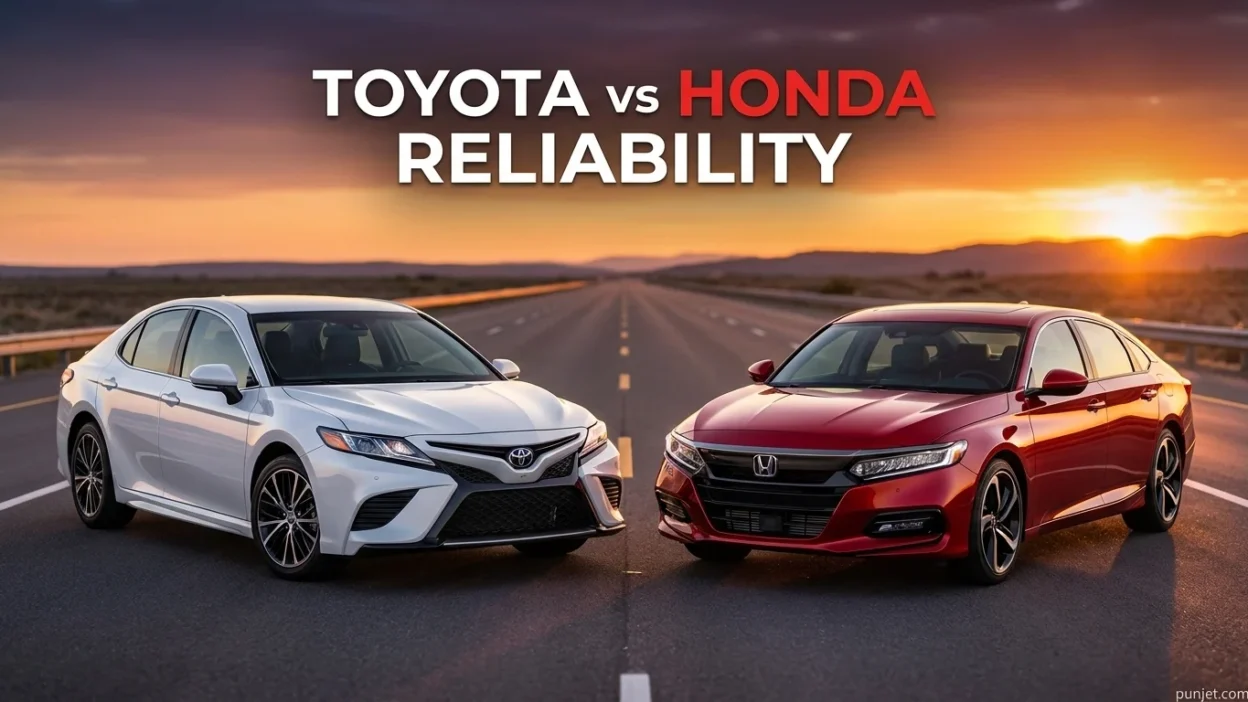
Choosing between Toyota and Honda can be difficult when reliability is your main concern. Both Japanese car brands have strong reputations for building dependable vehicles, offering practical designs, and keeping many models on the road for years. However, their reliability can vary depending on the model, model year, engine, maintenance history, and driving conditions.
Toyota is often the safer choice for buyers who prioritize long-term dependability and a lower-risk ownership experience, while Honda is also an excellent option for drivers who want reliability, comfortable driving, and practical performance. Neither brand wins every comparison, and a well-maintained Honda can be a better purchase than a poorly maintained Toyota. The best choice depends on the exact vehicles you are comparing and how you plan to use them.
This guide explains Toyota vs Honda reliability in simple English. You will learn how the brands compare in maintenance, repair costs, engine life, resale value, and long-term ownership. You will also discover what to check before buying a new or used vehicle so you can make a confident decision.
Quick Answer
Toyota and Honda are both reliable car brands, but Toyota is often favored for long-term durability and predictable ownership costs. Honda also offers dependable cars, efficient engines, and strong everyday performance. The most reliable choice depends on the specific model, model year, maintenance records, and previous driving conditions.
Why Do People Confuse Toyota and Honda Reliability?
People often compare Toyota and Honda because both brands are known for making dependable cars. Their vehicles are popular among commuters, families, first-time buyers, and people who want to keep a car for many years.
There are three main reasons the comparison can be confusing.
- Similar reputations: Both brands have many models with strong reliability records.
- Different results across models: A Toyota sedan may perform differently from a Honda SUV, so comparing brands alone can be misleading.
- Different reliability ratings: Consumer surveys, repair databases, and owner reviews may measure different things. One source might focus on reported problems, while another measures repair frequency or predicted reliability.
For example, Toyota Corolla and Honda Civic are popular compact cars, while Toyota Camry and Honda Accord compete in the midsize sedan category. Comparing vehicles in the same class gives you a fairer picture than comparing unrelated models.
First Word: Toyota Reliability
Toyota is a Japanese car manufacturer known for building practical vehicles with a strong focus on durability, everyday usability, and long-term ownership.
Why Is Toyota Considered Reliable?
Toyota has earned a strong reliability reputation through models such as the Corolla, Camry, and Prius. Many Toyota vehicles are designed for daily use, and several have demonstrated that they can remain dependable for a long time when properly maintained.
Common reasons buyers choose Toyota include:
- Long-term durability: Many Toyota models can accumulate high mileage with appropriate maintenance.
- Practical engineering: The brand offers many vehicles with well-established mechanical designs.
- Hybrid experience: Toyota has extensive experience producing hybrid vehicles, although reliability still depends on the particular system and model year.
- Used-car appeal: Popular Toyota models often attract strong demand in the used-car market.
- Everyday dependability: Many owners value Toyota vehicles for commuting, family travel, and routine driving.
Which Toyota Models Have a Strong Reliability Reputation?
The Toyota Corolla is a popular choice for buyers seeking an economical daily driver. The Camry appeals to people who want a comfortable midsize sedan, while the Prius is known for fuel-efficient hybrid driving.
The RAV4 is another popular option for families who need an SUV. However, reliability is not identical across every generation, engine, transmission, or hybrid system.
Before purchasing, check the specific model year’s reliability information, recalls, and maintenance requirements rather than assuming every Toyota is equally dependable.
What Are the Possible Disadvantages of Toyota?
Toyota is not perfect. Some model years have reported mechanical or electronic problems, and repairs can be expensive when a vehicle develops a major fault. Popular used models may also carry higher asking prices because of their reputation.
A Toyota that has missed oil changes, suffered accident damage, or received poor-quality repairs may be less reliable than a carefully maintained car from another brand.
Second Word: Honda Reliability
Honda is another Japanese automaker with a long history of producing dependable passenger cars and practical SUVs. Its vehicles are often appreciated for responsive engines, comfortable handling, fuel efficiency, and useful interior space.
Why Is Honda Considered Reliable?
Honda has built a strong reputation with vehicles such as the Civic, Accord, and CR-V. Many Honda models are suitable for daily commuting and long-distance driving when owners follow the recommended maintenance schedule.
Reasons people choose Honda include:
- Dependable daily driving: Many Honda cars work well for commuting, errands, and family use.
- Efficient engines: Several Honda models balance performance with reasonable fuel consumption.
- Enjoyable handling: Many drivers appreciate Honda’s steering and road manners.
- Practical interiors: Civic, Accord, and CR-V models offer useful space for different needs.
- Long service life: Well-maintained Honda vehicles can remain on the road for many years.
Which Honda Models Have a Strong Reliability Reputation?
The Honda Civic is a common choice for drivers who want a compact car with practical running costs. The Accord offers more passenger space, while the CR-V is popular among buyers who prefer an SUV.
The Honda Fit, where available, is also valued for its small size and flexible interior. Availability varies by market and model year.
As with Toyota, the precise generation matters. An older Honda with a complete service history may be a better purchase than a newer one with hidden mechanical problems.
What Are the Possible Disadvantages of Honda?
Honda reliability can vary by model year and powertrain. Some vehicles have experienced problems involving transmissions, air-conditioning systems, electronics, or other components. These issues do not affect every vehicle, and their importance depends on the exact model and production year.
Honda is also not automatically cheaper to repair than Toyota. Parts availability, labor rates, vehicle age, and local repair expertise all influence ownership costs.
Toyota vs Honda Reliability: Comparison Table
The following table summarizes the main differences between Toyota and Honda for buyers who care about dependable ownership.
| Feature | Toyota | Honda |
|---|---|---|
| Overall reliability | Excellent reputation | Excellent reputation |
| Long-term durability | Often has a slight advantage | Also strong |
| Engine reliability | Depends on engine and model | Depends on engine and model |
| Fuel efficiency | Strong, especially in many hybrids | Strong across many models |
| Maintenance costs | Often reasonable | Often reasonable |
| Repair costs | Vary by model and location | Vary by model and location |
| Used-car reliability | Consistently strong | Consistently strong |
| Resale value | Often strong | Often strong |
| Driving experience | Often focused on comfort and practicality | Often praised for responsive handling |
| Best buying approach | Check model-year records | Check model-year records |
Consumer Reports’ December 2025 predicted-reliability ranking placed Toyota first and Honda fourth among car brands. Its scores were 66 for Toyota and 59 for Honda. These results support Toyota’s overall advantage, but they do not guarantee that every Toyota will be more reliable than every Honda.
When Should You Choose Toyota or Honda?
The right choice depends on your budget, driving habits, and the type of vehicle you need.
Choose Toyota If You Want Long-Term Dependability
Toyota is worth considering if you plan to keep your vehicle for many years and want to reduce the risk of unexpected mechanical problems.
It may suit you if you:
- Want a dependable daily commuter.
- Prefer a brand with a strong history of long-term reliability.
- Are shopping for a used car with a good service record.
- Want a practical hybrid for regular driving.
- Value resale demand when you eventually sell your vehicle.
A Toyota Corolla or Camry can be a sensible starting point, depending on your space and budget requirements.
Choose Honda If You Want Reliability and an Engaging Drive
Honda is a strong alternative if you want dependable transportation with comfortable interiors and responsive driving characteristics.
It may suit you if you:
- Want a practical car for daily commuting.
- Enjoy responsive steering and handling.
- Need a family sedan or compact SUV.
- Find a Honda with better service records than a similar Toyota.
- Prefer the features and comfort offered by a particular Honda model.
The Honda Civic, Accord, and CR-V are useful models to compare against similar Toyota vehicles.
Which Is Better for a Used Car?
For a used car, condition is often more important than the badge on the front.
Before buying either brand, check the following:
- Service records and oil-change history.
- Accident and flood damage.
- Engine noise, smoke, and fluid leaks.
- Transmission behavior during a test drive.
- Warning lights and electronic systems.
- Recall history and completed recall repairs.
- A professional pre-purchase inspection.
If a used Honda has a complete service history and passes an independent inspection, it may be a much better purchase than a neglected Toyota.
10+ Examples of Toyota and Honda Reliability
These examples show how the two brands compare in real buying situations.
- Toyota Corolla vs Honda Civic: Both are popular compact cars. Compare the exact model year, mileage, maintenance history, and transmission condition before choosing.
- Toyota Camry vs Honda Accord: Both offer comfortable midsize transportation. Their reliability can differ by generation and engine.
- Toyota RAV4 vs Honda CR-V: Both are practical family SUVs. Check the specific gasoline or hybrid version rather than judging only by brand reputation.
- Toyota Prius vs Honda hybrid models: Toyota has extensive hybrid experience, but individual hybrid systems still need proper maintenance and model-specific research.
- An older Toyota vs a newer Honda: The newer Honda may be the better choice if it has fewer miles, better maintenance records, and no major accident damage.
- A high-mileage Toyota vs a low-mileage Honda: A well-maintained high-mileage Toyota may be dependable, but a carefully inspected, lower-mileage Honda could offer less risk.
- A Toyota with incomplete service records vs a Honda with full records: The Honda is generally the more reassuring purchase because its maintenance history is easier to verify.
- Toyota for daily commuting: A Corolla may be suitable for someone who wants a practical car for regular city and highway travel.
- Honda for family driving: A CR-V may suit a family that needs passenger space, useful storage, and comfortable everyday handling.
- Toyota for hybrid commuting: A Prius may be worth considering if fuel efficiency is a priority and the vehicle’s hybrid system has been properly maintained.
- Honda for a responsive driving experience: A Civic may appeal to a driver who values practical running costs and enjoyable handling.
- Toyota vs Honda in a hot climate: Both can be dependable, but cooling-system condition, correct fluids, air-conditioning performance, and regular maintenance are especially important.
- Toyota vs Honda for a first-time buyer: Either can be a sensible option. Insurance, fuel costs, repair access, and the vehicle’s condition should influence the decision.
Common Mistakes When Comparing Toyota and Honda
Even experienced buyers can make mistakes when choosing between these brands.
Mistake 1: Assuming Every Toyota Is Better
Toyota’s strong overall reputation does not mean every model year is trouble-free. Some engines, transmissions, and redesigned vehicles have had more problems than others.
Better approach: Research the exact model year and powertrain before making a decision.
Mistake 2: Assuming Honda Is Unreliable
Honda is also a highly regarded brand. A lower overall ranking in a particular survey does not mean that all Honda vehicles are unreliable.
Better approach: Compare the individual vehicles you are considering.
Mistake 3: Ignoring Maintenance History
A car needs regular oil changes, fluid checks, inspections, and repairs. Skipping essential maintenance can shorten the life of even a well-built vehicle.
Better approach: Ask for maintenance receipts and arrange an independent inspection.
Mistake 4: Looking Only at Mileage
Low mileage does not automatically mean a vehicle is in good condition. A car that has spent years unused may have aged tires, deteriorated seals, or other problems.
Better approach: Consider mileage, age, service history, and present condition together.
Mistake 5: Trusting One Reliability Ranking
Different studies use different methods and measure different types of problems. Their results may not match.
Better approach: Review more than one reliable source and check model-specific information.
Mistake 6: Choosing Only by Purchase Price
A cheaper vehicle may need expensive repairs shortly after purchase. A slightly more expensive car with a documented history may offer better value.
Better approach: Consider the expected cost of maintenance, repairs, fuel, insurance, and depreciation.
Memory Trick: How to Remember the Difference
Use this simple reminder:
- Toyota = a strong starting point for long-term reliability.
- Honda = a strong alternative for reliability and enjoyable everyday driving.
Remember that these are general tendencies, not guarantees. Both brands build dependable vehicles, and their performance varies by model and year.
For a quick buying decision, compare the exact vehicles first, then examine their service histories and expected ownership costs.
American vs British English
Toyota and Honda are Japanese brands, so their reliability does not depend on whether you use American or British English.
However, vehicle terminology can differ between the two forms of English.
| American English | British English |
|---|---|
| Gas | Petrol |
| Hood | Bonnet |
| Trunk | Boot |
| Tire | Tyre |
| Transmission | Gearbox, in many contexts |
| Auto repair shop | Garage |
| Windshield | Windscreen |
For example:
- American English: “The Toyota needs a transmission inspection.”
- British English: “The Toyota needs a gearbox inspection.”
Both versions communicate a similar idea, although technical meanings can vary by context.
Similar Words and Related Terms
Understanding these terms can help you make a better car-buying decision.
Reliability: How consistently a vehicle operates without developing problems.
Durability: How well a vehicle withstands use and aging over time.
Dependability: How confidently you can expect a vehicle to work when needed.
Maintenance: Routine work, such as oil changes and scheduled inspections, that keeps a car in good condition.
Repair costs: Money spent fixing problems after they occur.
Longevity: The length of time a vehicle remains useful and roadworthy.
Resale value: The amount you may receive when selling your vehicle.
Predicted reliability: An estimate of how likely a vehicle is to experience problems, based on available data and a particular study’s method.
These terms are related, but they are not interchangeable. A car can have low routine maintenance costs yet still experience an expensive repair. Similarly, a durable vehicle may last for many years without necessarily being inexpensive to maintain.
FAQs:
1. Is Toyota more reliable than Honda?
Toyota ranked ahead of Honda in Consumer Reports’ 2026 predicted-reliability rankings. However, both brands have strong reliability records, and the result for an individual vehicle depends on its model, year, and maintenance history.
2. Which lasts longer, Toyota or Honda?
Both Toyota and Honda vehicles can last for many years and accumulate high mileage with proper maintenance. Toyota has a slight advantage in some long-term reliability comparisons, but there is no universal lifespan that applies to every vehicle.
3. Is Honda cheaper to maintain than Toyota?
Not always. Maintenance and repair costs depend on the model, age, parts availability, labor rates, and local market. Compare the expected service costs of the exact vehicles rather than assuming one brand is always cheaper.
4. Which is better for a used car, Toyota or Honda?
Either can be a good used-car purchase. Toyota has a strong reputation for used-car reliability, but a well-maintained Honda may be a better option than a neglected Toyota. Always review service records and arrange a professional inspection.
5. Are Toyota or Honda engines more reliable?
Both manufacturers have produced many dependable engines. Reliability varies by engine family, model year, maintenance schedule, and driving conditions. Research the specific engine in the vehicle you want to buy.
6. Which brand is better for long-distance driving?
Both brands offer vehicles suitable for long-distance travel. Comfort, fuel economy, seat support, safety features, luggage space, and maintenance condition are more useful factors than brand reputation alone.
7. Which brand has better resale value?
Popular Toyota and Honda models can both retain their value well. Actual resale prices depend on local demand, vehicle condition, mileage, age, service history, and the specific model.
Remember This
- Toyota often leads in overall reliability rankings.
- Honda remains a dependable choice for many drivers.
- Individual model years can have very different reliability records.
- Maintenance history matters greatly when buying used.
- A professional inspection can help uncover expensive hidden problems.
- The best car is the one that meets your needs and has a strong record of dependable ownership.
Conclusion
Toyota vs Honda reliability is not a competition with one winner for every driver. Toyota has a slight advantage in several overall reliability comparisons, making it an excellent place to start if you want long-term dependability. Honda is also a strong choice, with practical vehicles, efficient engines, and enjoyable driving characteristics.
Before making your final decision, compare similar models, review their reliability records, check for recalls, and calculate the likely cost of ownership. If you are buying a used car, pay close attention to service history and current mechanical condition. These steps will help you choose a dependable vehicle, whether you prefer Toyota or Honda.
In the end, the badge matters less than the particular vehicle you buy and how well it has been maintained. A carefully selected Toyota or Honda can be a smart investment for years of everyday driving.

Emily Margaret is a writer and humor enthusiast at PunsJet.com. She enjoys creating clever puns and lighthearted content that entertains readers and adds a spark of humor to everyday life. With a love for wordplay and creativity, Emily aims to share fun, relatable jokes that make people smile and laugh.