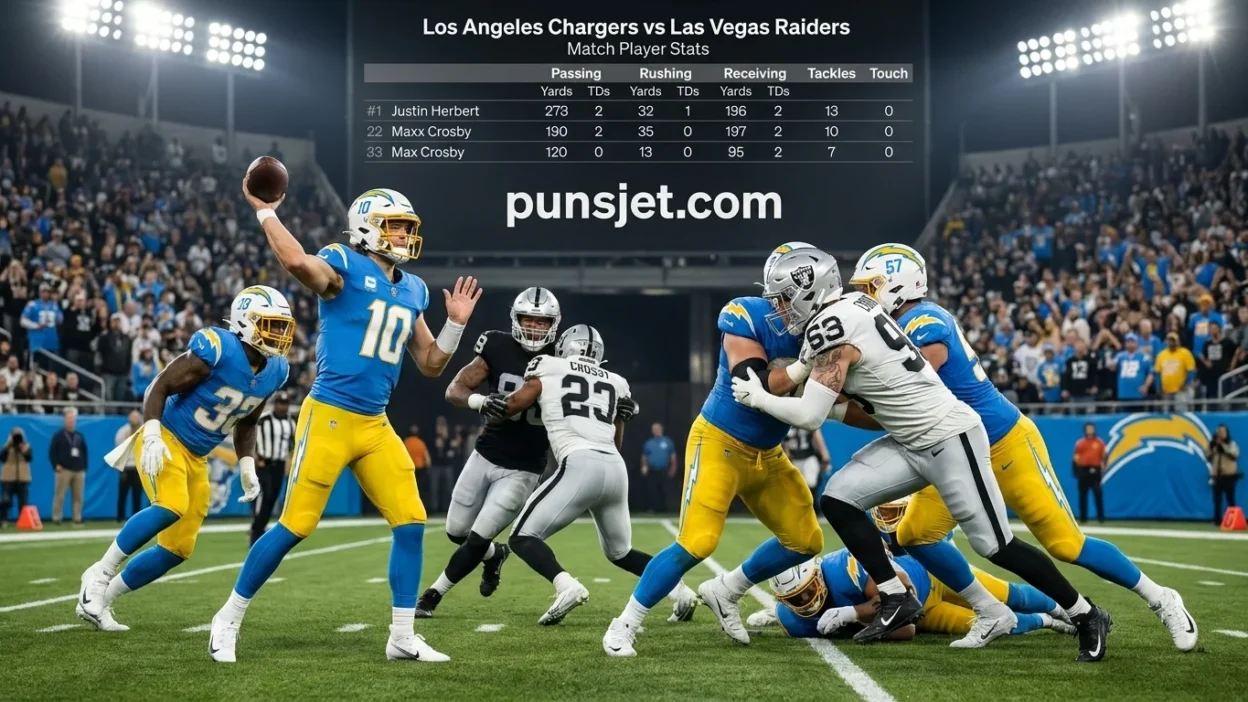
When fans search for Los Angeles Chargers vs Las Vegas Raiders match player stats, they usually want to know how the quarterbacks, running backs, receivers, and defensive players performed against each other. These stats can show who led the game in passing, rushing, receiving, tackles, sacks, interceptions, and touchdowns.
The Chargers and Raiders are AFC West rivals, so their matchups often attract strong interest from NFL fans. However, player statistics change from game to game, and the exact numbers depend on the specific meeting being discussed. A useful comparison should therefore identify the game first before presenting individual performances. This guide explains the main player-stat categories, how to read them, and what the numbers tell you about a Chargers-Raiders matchup.
Quick Answer
Los Angeles Chargers vs Las Vegas Raiders match player stats include passing yards, passing touchdowns, rushing yards, receiving yards, receptions, tackles, sacks, interceptions, and other key numbers. The leading performers depend on the specific Chargers-Raiders game, so the game date or season is important when checking exact statistics.
Why Do People Confuse Chargers vs Raiders Player Stats?
The Los Angeles Chargers and Las Vegas Raiders play in the same division, the AFC West, and can meet more than once during an NFL season.
This creates several possible matchups when someone searches for player stats. A Chargers quarterback’s performance in one game may be very different from his performance in another meeting with the Raiders.
For an accurate statistical comparison, always check:
- The game date
- The NFL season
- Passing statistics
- Rushing statistics
- Receiving statistics
- Defensive statistics
- Team scoring
- Turnovers
Los Angeles Chargers Player Stats
The Chargers’ player statistics can be divided into several major categories.
Passing Stats
Quarterback statistics normally include:
- Completions
- Pass attempts
- Completion percentage
- Passing yards
- Passing touchdowns
- Interceptions
- Passer rating
Passing yards show how many yards the quarterback gained through completed passes. Touchdowns show how many passing scores the quarterback produced.
Rushing Stats
Running backs and quarterbacks can contribute to the rushing attack.
Important rushing numbers include:
- Carries
- Rushing yards
- Average yards per carry
- Rushing touchdowns
- Longest rush
A high rushing total can indicate that the Chargers successfully moved the ball on the ground.
Receiving Stats
Wide receivers, tight ends, and running backs may record receiving statistics.
Common numbers include:
- Receptions
- Targets
- Receiving yards
- Yards per reception
- Receiving touchdowns
- Longest reception
A receiver with many targets may have played an important role even if another player finished with more receiving yards.
Las Vegas Raiders Player Stats
The Raiders’ statistics are measured in the same basic categories.
Passing Performance
The quarterback’s passing line can reveal how effectively Las Vegas moved the football through the air.
Look at:
- Completions
- Attempts
- Passing yards
- Passing touchdowns
- Interceptions
- Completion percentage
Rushing Performance
Raiders running backs and quarterbacks can contribute on the ground.
Useful statistics include:
- Carries
- Rushing yards
- Average
- Rushing touchdowns
- Longest run
Receiving Performance
Receiving statistics help identify which Raiders players made the biggest impact through the air.
Key figures include:
- Targets
- Receptions
- Receiving yards
- Average yards per catch
- Touchdowns
- Longest reception
Los Angeles Chargers vs Las Vegas Raiders Player Stats Comparison
| Category | Los Angeles Chargers | Las Vegas Raiders |
|---|---|---|
| Passing yards | Depends on game | Depends on game |
| Passing touchdowns | Depends on game | Depends on game |
| Rushing yards | Depends on game | Depends on game |
| Rushing touchdowns | Depends on game | Depends on game |
| Receiving yards | Depends on game | Depends on game |
| Receptions | Depends on game | Depends on game |
| Defensive tackles | Depends on game | Depends on game |
| Sacks | Depends on game | Depends on game |
| Interceptions | Depends on game | Depends on game |
| Total points | Depends on game | Depends on game |
Because the Chargers and Raiders can meet multiple times across different seasons, exact player statistics should always be connected to a particular game.
When Should You Use Each Statistic?
Different statistics answer different questions.
Use Passing Stats When:
You want to know which quarterback controlled the passing game.
For example, passing yards and touchdowns can show how productive the quarterback was through the air.
Use Rushing Stats When:
You want to understand the ground game.
A running back with 20 carries for a high yardage total had a major role in moving the offense.
Use Receiving Stats When:
You want to identify the most productive pass catchers.
Receiving yards and touchdowns are especially useful for finding the biggest offensive contributors.
Use Defensive Stats When:
You want to see which defenders affected the opponent’s offense.
Sacks, tackles, interceptions, forced fumbles, and tackles for loss can all be important.
10+ Examples of Chargers vs Raiders Player Stats
Here are examples of the types of statistics you may see in a Chargers-Raiders box score:
- A quarterback completes 25 of 35 passes for 280 yards.
- A quarterback throws three touchdown passes.
- A running back carries the ball 18 times for 95 yards.
- A receiver catches eight passes for 110 yards.
- A tight end records six receptions.
- A wide receiver scores a receiving touchdown.
- A defender records 10 total tackles.
- A pass rusher records two sacks.
- A defensive back makes an interception.
- A player forces a fumble.
- A running back produces a 40-yard run.
- A receiver makes a 50-yard catch.
These examples demonstrate how individual numbers can help explain the overall story of a football game.
What Are Common Mistakes When Reading Player Stats?
One common mistake is looking only at passing yards.
A quarterback may have a large yardage total but also throw multiple interceptions. Another quarterback could have fewer passing yards but protect the football and produce more touchdowns.
Another mistake is ignoring defensive statistics.
Football is not only about scoring. Sacks, interceptions, tackles, forced fumbles, and defensive stops can strongly affect the final result.
It is also important not to compare statistics from different games as though they came from the same matchup.
Memory Trick
A simple way to remember the main NFL player-stat categories is:
Pass → Run → Catch → Defend
- Pass: quarterback production
- Run: rushing production
- Catch: receiving production
- Defend: tackles, sacks, interceptions, and turnovers
When checking Chargers vs Raiders player stats, start with these four areas.
American vs British English
NFL terminology is primarily based on American English.
For example:
- Yard is used for football field measurements.
- Touchdown is used for a six-point scoring play.
- Quarterback is the main passing position.
- Running back describes a common offensive position.
- Defense is the standard American spelling.
British English commonly uses defence instead of defense, but NFL coverage normally follows American spelling because the league is based in the United States.
Similar Words and Terms
Several football terms are closely related to player statistics:
- Box score: A summary of the game’s statistics.
- Passing yards: Yards gained through completed passes.
- Rushing yards: Yards gained by running with the ball.
- Receiving yards: Yards gained after completed passes.
- Targets: Passes thrown toward a receiver.
- Tackles: Defensive plays that stop or bring down an opponent.
- Sack: When a defender tackles the quarterback behind the line of scrimmage during a passing play.
- Interception: A defensive player catches a pass intended for the offense.
- Turnover: A change of possession caused by an interception or fumble.
Final Verdict
Los Angeles Chargers vs Las Vegas Raiders match player stats provide a detailed picture of how each team performed during a specific NFL matchup.
For offense, focus on passing, rushing, receiving, and touchdowns. For defense, examine tackles, sacks, interceptions, forced fumbles, and other impact plays.
Most importantly, always identify the specific game and season before comparing player numbers. That prevents statistics from different Chargers-Raiders matchups from being mixed together.
FAQs:
Who are the Los Angeles Chargers?
The Los Angeles Chargers are an NFL team based in Los Angeles, California. They compete in the AFC West.
Who are the Las Vegas Raiders?
The Las Vegas Raiders are an NFL team based in Las Vegas, Nevada. They also compete in the AFC West.
What stats are included in NFL player statistics?
NFL player statistics commonly include passing, rushing, receiving, tackles, sacks, interceptions, touchdowns, and turnovers.
How do I compare Chargers and Raiders quarterbacks?
Compare completions, attempts, completion percentage, passing yards, touchdowns, interceptions, and passer rating.
What are the most important receiving stats?
Receptions, targets, receiving yards, yards per reception, and receiving touchdowns are among the most useful receiving statistics.
What defensive stats should I check?
Tackles, sacks, interceptions, forced fumbles, tackles for loss, and defensive touchdowns can help measure defensive impact.
Why does the game date matter?
The Chargers and Raiders play each other in different seasons and games. Player statistics can change significantly from one matchup to another.
Remember This
When looking at Chargers vs Raiders match player stats, remember:
Passing + Rushing + Receiving + Defense = Complete Player Performance
Do not judge a player using only one number. A complete box-score view gives you a much better understanding of the game.
The most useful approach is to identify the exact matchup first, then compare the key offensive and defensive statistics for both teams.
Conclusion
Los Angeles Chargers vs Las Vegas Raiders match player stats make it easier to understand what happened during an NFL game. Passing yards can show quarterback production, rushing numbers reveal the ground attack, and receiving statistics identify the most effective pass catchers. Defensive numbers add another important part of the story.
Because these AFC West rivals can meet in different games and seasons, the exact statistics must always be connected to the correct matchup. Once you know the game date, comparing player performances becomes much clearer and more meaningful.

Emily Margaret is a writer and humor enthusiast at PunsJet.com. She enjoys creating clever puns and lighthearted content that entertains readers and adds a spark of humor to everyday life. With a love for wordplay and creativity, Emily aims to share fun, relatable jokes that make people smile and laugh.