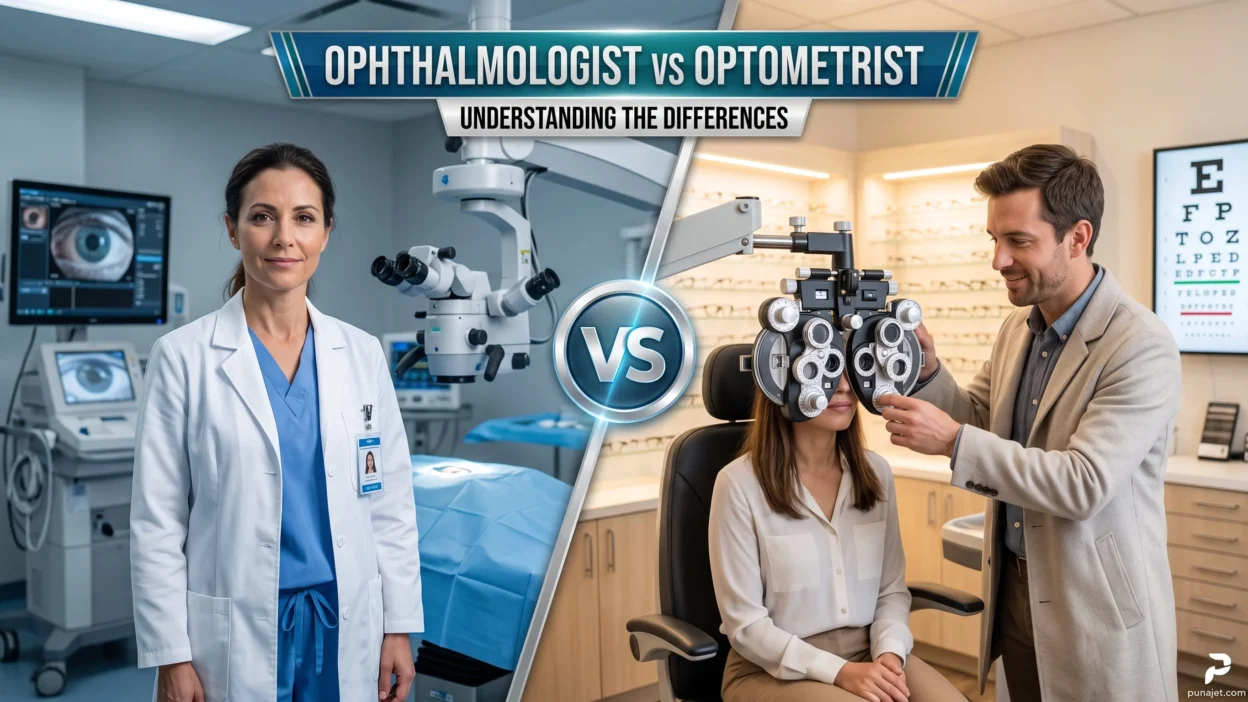
When you need an eye exam, new glasses, or help with an eye problem, you may wonder whether to visit an ophthalmologist or an optometrist. Both professionals help people protect their eyesight, but they have different levels of medical training, responsibilities, and areas of care. Understanding the difference can help you choose the right eye care professional for your needs.
The main difference between an ophthalmologist and an optometrist is that an ophthalmologist is a medical doctor who specializes in eye health and can perform eye surgery, while an optometrist provides primary eye care, checks vision, prescribes glasses and contact lenses, and diagnoses and treats many eye conditions. The exact services an optometrist can provide depend on local laws and training. Both professionals play important roles in preventing vision problems and helping people maintain healthy eyes. Whether you need a routine eye examination or treatment for a serious eye condition, knowing what each professional does makes your next step easier.
Quick Answer
An ophthalmologist is a medical doctor trained to diagnose and treat eye diseases, perform eye surgery, and manage complex eye conditions. An optometrist provides primary eye care, performs vision tests, prescribes glasses and contact lenses, and treats many common eye problems. Choose an optometrist for routine vision care or an ophthalmologist for surgical needs and complex medical eye conditions.
Why Do People Confuse Ophthalmologists and Optometrists?
People often confuse these two professionals because both work with eyes and help patients see clearly. They may perform eye examinations, check for vision problems, and identify signs of eye disease.
However, their education and responsibilities are different.
An optometrist usually focuses on primary eye care, vision correction, and the detection and treatment of many eye conditions. An ophthalmologist receives medical training that includes eye diseases, medical treatment, and eye surgery.
For example, someone who needs a new pair of glasses may visit an optometrist. Someone with a cataract that requires surgery will need an ophthalmologist.
Both professionals can work together when a patient needs different types of eye care.
What Is an Ophthalmologist?
An ophthalmologist is a medical doctor who specializes in the health of the eyes and visual system. Depending on the country, the professional may hold a medical degree such as an MD or an equivalent qualification.
Ophthalmologists receive medical training and specialized education in eye care. Their training prepares them to diagnose and manage a wide range of eye conditions, including serious diseases and problems that may require surgery.
What Does an Ophthalmologist Do?
An ophthalmologist may:
- Perform comprehensive eye examinations.
- Diagnose and treat eye diseases.
- Prescribe medicines for eye conditions.
- Perform eye surgery when needed.
- Manage conditions such as glaucoma and cataracts.
- Treat eye injuries and certain complex infections.
- Help patients manage diabetic eye disease.
- Provide specialized care for retinal, corneal, or other eye problems.
Some ophthalmologists complete additional training in a particular area, such as children’s eye care, retina treatment, or glaucoma.
When Should You See an Ophthalmologist?
You may need an ophthalmologist if you have:
- Cataracts that may require surgery.
- Glaucoma or another serious eye disease.
- A significant eye injury.
- A complicated eye infection or inflammation.
- A retinal problem.
- An eye condition that requires specialized medical treatment.
An ophthalmologist can also provide routine eye examinations and prescribe glasses or contact lenses when appropriate.
What Is an Optometrist?
An optometrist is an eye care professional trained to examine vision, identify eye problems, and provide primary eye care. Optometrists commonly hold an optometry degree, such as an OD in the United States, or the equivalent qualification recognized in their country.
Optometrists help people maintain clear vision and detect eye conditions before they become more serious. Their scope of practice varies by country and local regulations.
What Does an Optometrist Do?
An optometrist may:
- Check how clearly you see.
- Measure refractive errors such as nearsightedness and farsightedness.
- Prescribe glasses and contact lenses.
- Examine the eyes for signs of disease.
- Diagnose many common eye conditions.
- Treat certain eye problems, including some infections or inflammation, where permitted.
- Monitor long-term conditions such as glaucoma.
- Refer patients to an ophthalmologist when specialist care or surgery is needed.
An optometrist is often a suitable first point of contact for routine eye care.
When Should You See an Optometrist?
Consider visiting an optometrist if you:
- Need new glasses.
- Want to try contact lenses.
- Have blurry vision that needs assessment.
- Need a routine eye examination.
- Experience eye strain while reading or using a computer.
- Want to check whether your prescription has changed.
- Need an initial assessment of a common eye problem.
An optometrist may refer you to an ophthalmologist if your condition requires medical or surgical care beyond the optometrist’s scope of practice.
Ophthalmologist vs Optometrist: Comparison Table
| Feature | Ophthalmologist | Optometrist |
|---|---|---|
| Main role | Medical and surgical eye care | Primary eye and vision care |
| Education | Medical degree plus specialized ophthalmology training | Professional optometry degree or equivalent |
| Eye examinations | Yes | Yes |
| Prescribes glasses | Yes, when appropriate | Yes |
| Prescribes contact lenses | Yes, when appropriate | Yes |
| Diagnoses eye diseases | Yes | Yes, within their scope of practice |
| Treats eye conditions | Yes | Yes, within their scope of practice |
| Performs eye surgery | Yes, when trained and qualified | Generally no |
| Manages complex eye diseases | Yes | May monitor or refer, depending on the condition |
| Best known for | Medical treatment and surgery | Vision correction and primary eye care |
Both professionals are important, and neither is automatically the better choice for every patient. The right choice depends on your symptoms, medical needs, and the services available in your area.
When Should You Use Each One?
Choosing between an ophthalmologist and an optometrist depends on what kind of help you need.
Choose an Optometrist For:
- Routine eye checkups.
- Glasses and contact lens prescriptions.
- Blurry vision that needs an eye examination.
- Initial evaluation of many common eye problems.
- Monitoring certain eye conditions when appropriate.
Example: If you notice that road signs look blurry while driving, an optometrist can check your vision and determine whether you need glasses or further medical evaluation.
Choose an Ophthalmologist For:
- Cataract evaluation and surgery.
- Complex or advanced eye diseases.
- Surgical treatment of certain eye conditions.
- Serious eye injuries.
- Specialized care for retinal or corneal diseases.
Example: If you have been diagnosed with a cataract and your vision is significantly affected, an ophthalmologist can assess whether surgery is appropriate.
What If You Are Not Sure?
Start with an optometrist for a routine vision concern if you can access one. They can examine your eyes and refer you to an ophthalmologist when necessary.
However, do not delay urgent care for sudden vision loss, a sudden increase in flashes or floaters, a painful red eye, or an eye injury. Seek urgent medical assessment, preferably from an emergency eye service or ophthalmologist.
12 Examples of Ophthalmologist vs Optometrist
These examples show how the two words are used in everyday English.
- Routine eye exam: I visited an optometrist for my annual eye examination.
- New glasses: The optometrist prescribed glasses to correct my blurry vision.
- Contact lenses: My optometrist helped me choose suitable contact lenses.
- Cataract surgery: The ophthalmologist performed my cataract surgery.
- Glaucoma care: The ophthalmologist created a treatment plan for my glaucoma.
- Eye injury: After a serious eye injury, the patient received urgent specialist care.
- Children’s vision: The optometrist checked the child’s eyesight at school.
- Diabetes-related eye problems: The patient visited an ophthalmologist for a detailed examination of diabetic eye disease.
- Eye strain: I booked an appointment with an optometrist because my eyes felt tired after reading.
- Retinal disease: The ophthalmologist examined the patient’s retina.
- Changing prescription: My optometrist found that I needed a stronger glasses prescription.
- Specialist referral: The optometrist referred me to an ophthalmologist for further evaluation.
These examples demonstrate that optometrists often provide the first level of eye care, while ophthalmologists offer medical and surgical expertise for a broader range of complex conditions.
Common Mistakes
People sometimes misunderstand the difference between these two eye care professionals. Here are some common mistakes to avoid.
Mistake 1: Thinking They Do Exactly the Same Job
Both examine eyes, but their education and professional responsibilities differ.
Better understanding: Optometrists commonly provide primary eye care, while ophthalmologists are medical doctors who can also perform eye surgery.
Mistake 2: Believing Optometrists Only Sell Glasses
Optometrists do more than prescribe glasses. They examine eyes, detect many eye conditions, and may provide treatment within their legal scope of practice.
Better understanding: Optometry includes vision correction, eye health assessment, and primary eye care.
Mistake 3: Thinking Every Eye Problem Requires Surgery
Many eye problems can be managed with glasses, medicines, monitoring, or other nonsurgical treatments.
Better understanding: An ophthalmologist may recommend surgery only when it is appropriate for the condition.
Mistake 4: Assuming an Optometrist Cannot Detect Eye Disease
Optometrists can identify signs of many eye diseases during an examination. They may treat certain conditions or refer patients for specialized care.
Better understanding: A routine eye exam can help detect problems that may not cause obvious symptoms at first.
Mistake 5: Confusing an Optician With an Optometrist
An optician generally helps fit and dispense glasses or contact lenses according to a prescription. An optometrist examines vision and provides eye care within their scope of practice.
Better understanding: An optician, optometrist, and ophthalmologist have different roles.
Memory Trick: How to Remember the Difference
Use this simple memory trick:
- Ophthalmologist = medical eye specialist. Think of eye disease, medical treatment, and surgery.
- Optometrist = primary vision care. Think of eye examinations, glasses, contact lenses, and common eye problems.
Another easy way to remember it is to connect an optometrist with your prescription and an ophthalmologist with specialized medical or surgical care.
Remember that ophthalmologists can also prescribe glasses, and optometrists can diagnose and treat many eye conditions. These are useful general differences, not absolute limits on everything each professional can do.
American vs British English
The words ophthalmologist and optometrist are used in both American and British English. Their spelling does not change between the two varieties.
However, professional qualifications, job responsibilities, and the healthcare system can differ by country.
In the United States, ophthalmologists are medical doctors, while optometrists generally complete a Doctor of Optometry degree. In the United Kingdom, ophthalmologists are medically qualified doctors who specialize in eye care, while optometrists are regulated eye care professionals trained to examine vision and assess eye health.
The exact scope of practice depends on local rules. If you are seeking eye care in another country, check the professional’s qualifications and the services they are authorized to provide.
Similar Words: Ophthalmologist, Optometrist, and Optician
These three terms are related, but they do not mean the same thing.
Ophthalmologist
A medical doctor who specializes in eye diseases and can perform eye surgery.
Example: The ophthalmologist treated my retinal condition.
Optometrist
An eye care professional who examines vision, prescribes corrective lenses, and provides primary eye care.
Example: The optometrist checked my eyesight and updated my prescription.
Optician
A professional who helps fit and supply glasses or contact lenses. Depending on local rules and qualifications, an optician’s responsibilities may vary.
Example: The optician adjusted my new glasses so they fit comfortably.
The easiest distinction is that ophthalmologists provide medical and surgical eye care, optometrists provide primary eye and vision care, and opticians primarily help people obtain and properly fit corrective eyewear.
FAQs:
1. Is an ophthalmologist better than an optometrist?
Neither professional is better for every situation. An optometrist is often a good choice for routine vision care, while an ophthalmologist is appropriate for complex eye diseases, specialized medical treatment, and surgery.
2. Can an optometrist diagnose eye diseases?
Yes. Optometrists can detect and diagnose many eye conditions within their professional scope. They may treat some conditions and refer patients to ophthalmologists when specialist care is necessary.
3. Can an optometrist perform eye surgery?
Optometrists generally do not perform eye surgery. Eye surgery is typically performed by an appropriately trained and licensed ophthalmologist.
4. Should I see an ophthalmologist or optometrist for blurry vision?
For gradual blurry vision without warning signs, an optometrist is often a suitable starting point. If the blurry vision begins suddenly, especially with pain, flashes, new floaters, or vision loss, seek urgent medical care.
5. Who should I see for cataracts?
An ophthalmologist can diagnose cataracts, assess their effect on your vision, and determine whether surgery may help. An optometrist may also identify cataracts during an eye examination and refer you for specialist assessment.
6. Can an ophthalmologist prescribe glasses?
Yes. Ophthalmologists can prescribe glasses and contact lenses when appropriate. However, many people visit optometrists for routine vision testing and prescription updates.
7. What is the difference between an optometrist and an optician?
An optometrist examines vision, assesses eye health, and prescribes corrective lenses. An optician helps fit and supply glasses or contact lenses. Their exact responsibilities depend on local regulations and qualifications.
8. How often should I visit an eye care professional?
The recommended frequency depends on your age, vision, medical history, risk factors, and existing eye conditions. Follow the schedule recommended by your eye care professional. Do not wait for a routine checkup if you develop sudden or severe symptoms.
Remember This
- Ophthalmologist: A medical doctor specializing in eye health, disease treatment, and eye surgery.
- Optometrist: A professional who provides primary eye care, checks vision, and prescribes glasses or contact lenses.
- Optician: A professional who helps fit and supply corrective eyewear.
- Routine vision concern: An optometrist is often a suitable starting point.
- Complex eye disease or surgery: An ophthalmologist may be needed.
- Sudden vision loss or serious eye symptoms: Seek urgent medical care.
Conclusion
The difference between an ophthalmologist and an optometrist comes down to their training and the type of eye care they provide. Optometrists commonly help with routine eye examinations, vision correction, and many common eye conditions. Ophthalmologists are medical doctors who can provide specialized treatment for eye diseases and perform surgery when necessary. Both professionals are valuable, and choosing the right one depends on your individual needs.
If you need new glasses or a routine eye check, an optometrist is often a sensible first choice. If you have a complex eye condition or may need surgery, an ophthalmologist can provide specialized care. Always seek urgent medical attention for sudden vision changes, severe eye pain, or a serious eye injury. Understanding these differences can help you make an informed decision and take better care of your eyesight.

Emily Margaret is a writer and humor enthusiast at PunsJet.com. She enjoys creating clever puns and lighthearted content that entertains readers and adds a spark of humor to everyday life. With a love for wordplay and creativity, Emily aims to share fun, relatable jokes that make people smile and laugh.