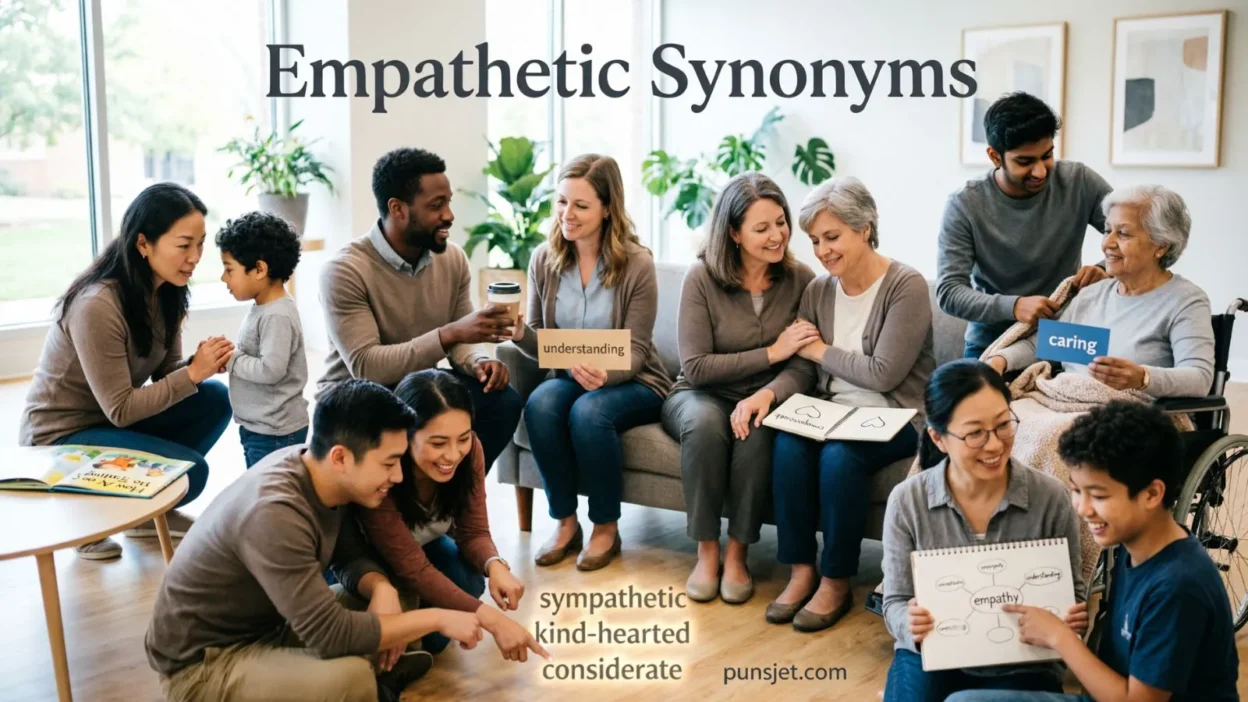
Understanding empathetic synonyms can help you communicate feelings, emotions, and understanding more effectively.
If you’re a student, writer, ESL learner, or content creator, knowing different ways to express empathy can make your writing more natural and engaging.
Empathy is an important human quality. It allows us to understand and share the feelings of others.
In both personal conversations and professional communication, using the right synonym can help convey the exact level of care, compassion, or emotional understanding you want to express.
This guide explores the meaning of empathetic, provides 30 useful empathetic synonyms, and explains when and how to use each one correctly.
What Does Empathetic Mean?
Empathetic means being able to understand and share another person’s feelings or experiences. An empathetic person can imagine what someone else is going through and respond with kindness and understanding.
Simple Definition
Someone who is empathetic:
- Understands other people’s emotions
- Listens without judgment
- Shows care and concern
- Connects emotionally with others
Example
The empathetic teacher understood why the student felt nervous before the presentation.
Tone and Usage Context
The word empathetic is commonly used in:
- Personal relationships
- Counseling and therapy
- Customer service
- Leadership and management
- Education
- Emotional storytelling
It usually carries a warm, caring, and understanding tone.
30 Empathetic Synonyms
1. Compassionate
Meaning: Showing deep concern for others’ suffering.
Example: The compassionate nurse comforted the patient.
Best Usage Context: Healthcare, support roles, emotional situations.
2. Understanding
Meaning: Able to recognize and accept another person’s feelings.
Example: My manager was understanding about my situation.
Best Usage Context: Everyday conversations.
3. Sympathetic
Meaning: Feeling concern or sorrow for someone.
Example: She gave a sympathetic response to the bad news.
Best Usage Context: Offering comfort.
4. Caring
Meaning: Showing kindness and concern.
Example: He is a caring friend who always listens.
Best Usage Context: Relationships and friendships.
5. Kindhearted
Meaning: Naturally gentle and considerate.
Example: The kindhearted neighbor helped everyone.
Best Usage Context: Character descriptions.
6. Sensitive
Meaning: Aware of others’ emotions.
Example: She is sensitive to people’s feelings.
Best Usage Context: Emotional awareness.
7. Considerate
Meaning: Thoughtful about others’ needs.
Example: It was considerate of him to check in.
Best Usage Context: Social interactions.
8. Warmhearted
Meaning: Friendly and affectionate.
Example: Everyone appreciated her warmhearted nature.
Best Usage Context: Personal descriptions.
9. Supportive
Meaning: Providing encouragement and help.
Example: My family was supportive during difficult times.
Best Usage Context: Teamwork and relationships.
10. Thoughtful
Meaning: Paying attention to others’ feelings.
Example: The thoughtful gift meant a lot.
Best Usage Context: Personal gestures.
11. Gentle
Meaning: Kind and calm in behavior.
Example: His gentle words eased her worries.
Best Usage Context: Comforting situations.
12. Tenderhearted
Meaning: Easily moved by emotions.
Example: She is tenderhearted toward animals.
Best Usage Context: Emotional discussions.
13. Benevolent
Meaning: Well-meaning and kind.
Example: The benevolent leader supported the community.
Best Usage Context: Formal writing.
14. Altruistic
Meaning: Concerned with helping others.
Example: Her altruistic efforts inspired many.
Best Usage Context: Charity and volunteering.
15. Humane
Meaning: Showing compassion and kindness.
Example: The organization promotes humane treatment.
Best Usage Context: Social issues.
16. Concerned
Meaning: Caring about someone’s well-being.
Example: She seemed genuinely concerned.
Best Usage Context: Everyday communication.
17. Attentive
Meaning: Carefully listening and observing.
Example: The attentive counselor helped greatly.
Best Usage Context: Professional support.
18. Reassuring
Meaning: Making someone feel less worried.
Example: His reassuring words helped calm her.
Best Usage Context: Encouragement.
19. Helpful
Meaning: Ready to assist others.
Example: The staff was extremely helpful.
Best Usage Context: General use.
20. Patient
Meaning: Calm and understanding with others.
Example: The patient teacher explained again.
Best Usage Context: Teaching and mentoring.
21. Generous
Meaning: Willing to give time or support.
Example: She was generous with her advice.
Best Usage Context: Acts of kindness.
22. Nurturing
Meaning: Encouraging growth and well-being.
Example: The nurturing environment helped children thrive.
Best Usage Context: Parenting and education.
23. Responsive
Meaning: Reacting positively to others’ needs.
Example: The responsive team addressed concerns quickly.
Best Usage Context: Customer service.
24. Friendly
Meaning: Kind and pleasant toward others.
Example: The friendly receptionist welcomed visitors.
Best Usage Context: Casual communication.
25. Encouraging
Meaning: Giving confidence and support.
Example: Her encouraging comments boosted morale.
Best Usage Context: Motivation.
26. Merciful
Meaning: Showing forgiveness and compassion.
Example: The judge was merciful in his decision.
Best Usage Context: Formal contexts.
27. Caring-hearted
Meaning: Naturally concerned about others.
Example: He has a caring-hearted personality.
Best Usage Context: Personal descriptions.
28. Affectionate
Meaning: Showing love and warmth.
Example: She gave her child an affectionate hug.
Best Usage Context: Family relationships.
29. Bighearted
Meaning: Extremely generous and kind.
Example: The bighearted donor helped many families.
Best Usage Context: Informal praise.
30. Insightful
Meaning: Understanding emotions deeply.
Example: Her insightful advice was comforting.
Best Usage Context: Counseling and communication.
Comparison Guide: When to Use Different Empathetic Synonyms
| Synonym | Best For | Tone |
|---|---|---|
| Compassionate | Helping people in distress | Warm |
| Understanding | Daily conversations | Neutral |
| Sympathetic | Expressing concern | Caring |
| Supportive | Encouragement | Positive |
| Considerate | Thoughtful actions | Respectful |
| Sensitive | Emotional awareness | Gentle |
| Altruistic | Selfless acts | Formal |
| Nurturing | Growth and care | Warm |
| Reassuring | Reducing anxiety | Comforting |
| Friendly | Casual interactions | Informal |
How to Choose the Right Synonym
Choosing the best word depends on the situation and the message you want to communicate.
For Emotional Support
Use:
- Compassionate
- Sympathetic
- Reassuring
- Caring
For Professional Settings
Use:
- Understanding
- Considerate
- Attentive
- Responsive
For Leadership
Use:
- Supportive
- Compassionate
- Thoughtful
- Humane
For Personal Relationships
Use:
- Warmhearted
- Affectionate
- Kindhearted
- Gentle
For Formal Writing
Use:
- Benevolent
- Altruistic
- Humane
- Merciful
Common Mistakes When Using Empathetic Synonyms
Confusing Empathy and Sympathy
- Empathy: Understanding another person’s feelings.
- Sympathy: Feeling sorry for someone.
Using Formal Words in Casual Conversations
Words like benevolent and altruistic may sound too formal in everyday speech.
Ignoring Context
Always choose a synonym that matches the situation, audience, and tone.
Why Learning Empathetic Synonyms Matters
Expanding your vocabulary helps you:
- Communicate more clearly
- Express emotions accurately
- Improve writing quality
- Sound more natural in conversations
- Create stronger connections with readers
For writers and content creators, knowing multiple empathetic synonyms also prevents repetition and improves readability.
Conclusion
Learning empathetic synonyms can significantly improve your communication skills.
While the word empathetic itself is powerful, alternatives such as compassionate, understanding, supportive, considerate, and kindhearted allow you to express different shades of emotional understanding.
The key is to choose the synonym that best fits your audience, tone, and purpose.
By practicing these words in everyday writing and conversations, you’ll build a richer vocabulary and become a more effective communicator.

Emily Margaret is a writer and humor enthusiast at PunsJet.com. She enjoys creating clever puns and lighthearted content that entertains readers and adds a spark of humor to everyday life. With a love for wordplay and creativity, Emily aims to share fun, relatable jokes that make people smile and laugh.