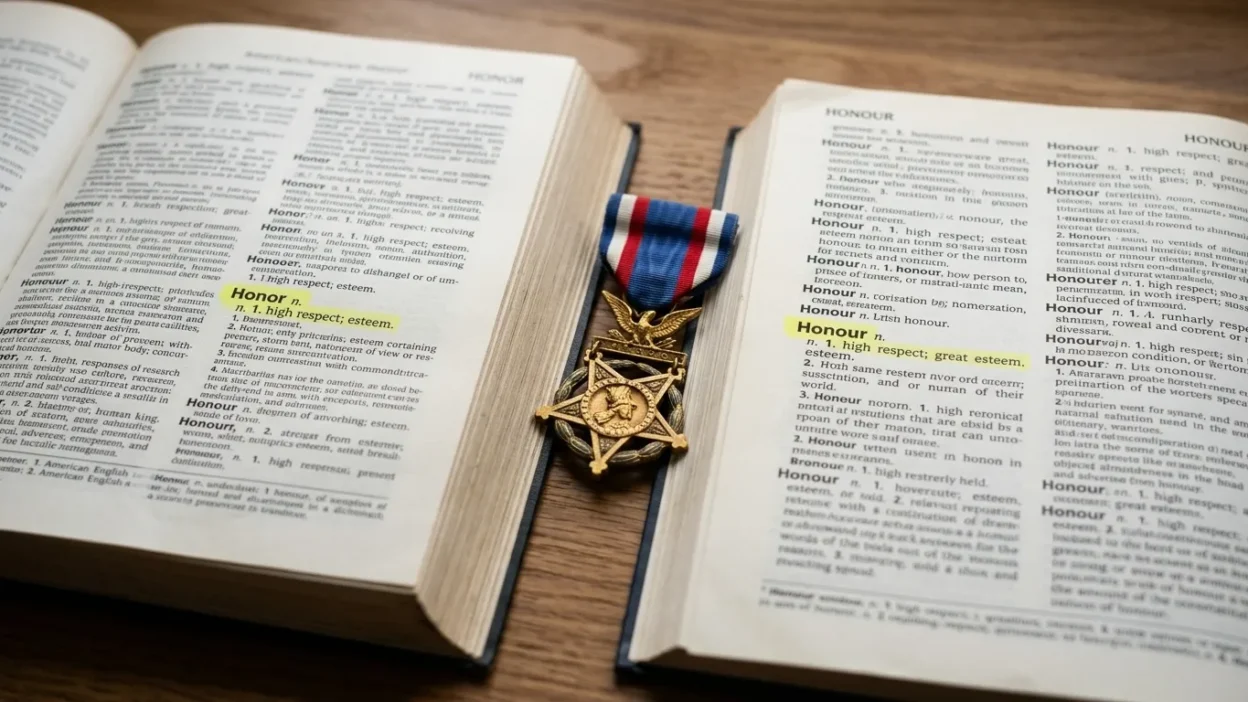
Have you ever wondered if to write honor or honour? Both spellings are correct, and both have the same meaning. The main difference is where they are commonly used. Honor is the standard American English spelling, while honour is the standard British English spelling. Both words refer to respect, honesty, dignity, or something that makes a person feel proud.
These two spellings can be confusing because they look almost identical, and their pronunciation and meaning do not change. You may see honor in American books, newspapers, and school assignments, while honour appears in British writing and many other English-speaking countries. The correct choice depends on your audience and the type of English you are using. In this guide, you will learn the meaning of each spelling, when to use it, common mistakes to avoid, and examples that make the difference easy to understand.
Quick Answer: Honor vs. Honour
Honor is the American English spelling, and honour is the British English spelling. Both mean respect, dignity, or something that brings pride. Neither spelling is more correct than the other. Use honor when following American English and honour when following British English. Keep your spelling consistent throughout your writing.
Why Do People Confuse Honor and Honour?
People often confuse these words because they have the same meaning and pronunciation. The only visible difference is the letter u in honour.
English has several spelling differences between American and British English. American spelling often removes the letter u from certain words, while British spelling keeps it.
For example:
- Color (American) / Colour (British)
- Favor (American) / Favour (British)
- Labor (American) / Labour (British)
- Humor (American) / Humour (British)
- Honor (American) / Honour (British)
These differences developed through changes in English spelling over time. American dictionaries generally follow American spelling conventions, while British dictionaries follow British conventions.
What Does Honor Mean?
Honor is the standard American English spelling. It can be used as both a noun and a verb.
Honor as a Noun
As a noun, honor means respect, good character, dignity, or something that makes someone feel proud.
Examples:
- Winning the award was a great honor.
- She is a person of honor.
- It was an honor to meet the president.
- The medal was given in his honor.
Honor as a Verb
As a verb, honor means to show respect, keep a promise, or recognize someone’s achievements.
Examples:
- We honor our teachers for their hard work.
- He always honors his promises.
- The school will honor the winning students.
- They honor their country’s traditions.
In American English, use honor in both formal and informal writing.
What Does Honour Mean?
Honour is the standard British English spelling. It has exactly the same meaning as honor and can also function as a noun or a verb.
Honour as a Noun
As a noun, honour refers to respect, dignity, good character, or a special privilege.
Examples:
- It was an honour to meet the queen.
- She brought honour to her family.
- Receiving the prize was a great honour.
- He acted with honour and courage.
Honour as a Verb
As a verb, honour means to respect someone, fulfill a promise, or recognize an achievement.
Examples:
- We honour those who serve our country.
- She always honours her commitments.
- The school will honour the best students.
- They honour their cultural traditions.
In British English, honour is the usual spelling in both formal and everyday writing.
Honor vs. Honour: Comparison Table
| Feature | Honor | Honour |
|---|---|---|
| English variety | American English | British English |
| Meaning | Respect, dignity, or pride | Respect, dignity, or pride |
| Part of speech | Noun and verb | Noun and verb |
| Pronunciation | Usually the same | Usually the same |
| Letter U | No | Yes |
| Common usage | United States | United Kingdom and many other regions |
| Example | It is an honor. | It is an honour. |
| Related adjective | Honorable | Honourable |
| Related verb form | Honored | Honoured |
| Related noun form | Honoring | Honouring |
The main difference is spelling, not meaning. Both forms are correct when used according to the relevant English spelling convention.
When Should You Use Honor or Honour?
The best choice depends on your intended audience and the spelling style you are following.
Use Honor in American English
Choose honor when writing for an American audience or following American English spelling rules.
Examples:
- It was an honor to receive the award.
- We honor our veterans every year.
- She is an honorable person.
- The organization honored its founder.
Use Honour in British English
Choose honour when writing for a British audience or following British English spelling rules.
Examples:
- It was an honour to receive the award.
- We honour our veterans every year.
- She is an honourable person.
- The organisation honoured its founder.
British-style spelling is also common in countries such as Australia and New Zealand. Canadian English often uses honour, although Canadian spelling has its own conventions and some words follow American patterns.
Important tip: If you are writing an essay, report, article, or professional document, follow one spelling style consistently. Avoid switching between honor and honour without a specific reason.
12 Examples of Honor and Honour in Sentences
These examples show how the two spellings work in everyday English.
- American: It is an honor to work with you.
British: It is an honour to work with you. - American: We honor our brave soldiers.
British: We honour our brave soldiers. - American: She received a great honor for her work.
British: She received a great honour for her work. - American: He is an honorable man.
British: He is an honourable man. - American: The school honored its best students.
British: The school honoured its best students. - American: They honored their family traditions.
British: They honoured their family traditions. - American: It was an honor to meet the author.
British: It was an honour to meet the author. - American: The award was given in her honor.
British: The award was given in her honour. - American: He believes in honor and honesty.
British: He believes in honour and honesty. - American: The company will honor its agreement.
British: The company will honour its agreement. - American: The ceremony honored the late teacher.
British: The ceremony honoured the late teacher. - American: She felt honored to be invited.
British: She felt honoured to be invited.
Notice that the meaning remains the same in every pair. Only the spelling changes to match the English variety.
Common Mistakes to Avoid
Even though honor and honour are easy to understand, writers sometimes make these mistakes.
1. Thinking One Spelling Is Wrong
Incorrect assumption: “Honour is always a spelling mistake.”
Correction: Both spellings are correct. The appropriate form depends on the English variety.
2. Mixing American and British Spelling
A sentence such as “It was an honor to meet him, and we honour his work” mixes the two conventions.
For consistent American English, write:
“It was an honor to meet him, and we honor his work.”
For consistent British English, write:
“It was an honour to meet him, and we honour his work.”
3. Changing the Meaning
Some learners think honor and honour have different meanings. They do not. Both can describe respect, dignity, a special privilege, or the act of showing respect.
4. Forgetting Related Spellings
The same spelling pattern applies to several related words.
| American English | British English |
|---|---|
| Honorable | Honourable |
| Honored | Honoured |
| Honoring | Honouring |
Remember that these forms follow the same general regional spelling pattern.
5. Assuming Every British Word Contains an Extra U
Not every American and British spelling difference involves the letter u. For example, organize is used in both American English and some British spelling systems, although organise is also common in British English.
Learn the spelling of each word rather than applying one rule to every situation.
Memory Trick: How to Remember Honor vs. Honour
Use this simple trick:
Honor = USA. Honour = UK-style spelling.
Remember that the British spelling keeps the letter U, while the American spelling leaves it out.
You can also remember these pairs:
- Color / Colour
- Favor / Favour
- Humor / Humour
- Honor / Honour
If you remember the spelling of color and colour, you can use the same pattern to remember honor and honour.
American vs. British English: Which Is Correct?
Both spellings are correct, but each belongs to a different spelling convention.
American English generally uses honor, color, favor, and labor. British English generally uses honour, colour, favour, and labour.
Other English-speaking countries may follow British conventions for these words, but local spelling preferences can vary. Canadian English, for example, commonly uses honour, while some other spellings may differ from both American and British usage.
The important point is to consider your audience. If you are writing for an American school, publication, or company, honor is usually the best choice. If you are writing for a British audience, honour is generally preferred.
Neither form is more formal, more respectful, or more meaningful than the other.
Similar Words to Honor and Honour
Learning related words can help you understand spelling differences more easily.
| American English | British English |
|---|---|
| Color | Colour |
| Favor | Favour |
| Labor | Labour |
| Humor | Humour |
| Neighbor | Neighbour |
| Behavior | Behaviour |
| Flavor | Flavour |
| Rumor | Rumour |
| Honorable | Honourable |
| Honored | Honoured |
These examples show a common spelling pattern, although English spelling conventions have exceptions.
It is also helpful to understand words related to the meaning of honor and honour:
- Respect: Showing that you value someone.
- Dignity: The quality of being worthy of respect.
- Integrity: Being honest and following strong moral principles.
- Recognition: Publicly acknowledging someone’s work or achievements.
- Privilege: A special opportunity or benefit.
These words are related in meaning, but they are not exact replacements in every sentence.
FAQs:
1. Is honor or honour correct?
Both are correct. Honor is the standard American English spelling, while honour is the standard British English spelling. They have the same meaning and pronunciation.
2. Is honor American or British?
Honor is the standard American English spelling. It is commonly used in American books, newspapers, schools, and professional writing.
3. Is honour British or American?
Honour is the standard British English spelling. It is also widely used in countries such as Australia and New Zealand.
4. Do honor and honour mean the same thing?
Yes. Both words can mean respect, dignity, a special privilege, or something that brings pride. They can also mean to show respect or fulfill a promise when used as verbs.
5. How do you spell honor in the UK?
In British English, the usual spelling is honour, with a u. The related words are commonly spelled honourable, honoured, and honouring.
6. Why does American English spell honor without a U?
American English developed spelling conventions that removed the u from several words traditionally written with it. This is why Americans generally write honor, color, and favor, while British English commonly retains the u.
7. Should I use honor or honour in a formal letter?
Use the spelling that matches your audience and the style of your organization. Choose honor for American English and honour for British English. Both are appropriate in formal writing.
8. Is honorable or honourable correct?
Both are correct. Honorable is the standard American spelling, while honourable is the standard British spelling. Both describe someone or something worthy of respect.
Remember This
- Honor = American English.
- Honour = British English.
- Both words mean respect, dignity, or pride.
- Both can be used as nouns and verbs.
- Use one spelling style consistently in your writing.
Conclusion
The choice between honor and honour depends on the type of English you are using. American English usually drops the u, while British English keeps it. The two words have the same meaning, pronunciation, and grammatical uses, so you do not need to learn two different definitions.
For everyday writing, remember this simple rule: use honor when writing in American English and honour when writing in British English. Once you understand this spelling difference, you can use both forms confidently in essays, emails, schoolwork, and professional documents.

Donald Andrew is the creative mind behind PunsJet.com, where he shares clever wordplay and humorous puns for readers around the world. With a passion for language and comedy, Donald enjoys crafting witty jokes that bring smiles to everyday conversations. His goal is to make humor simple, fun, and easy to share.