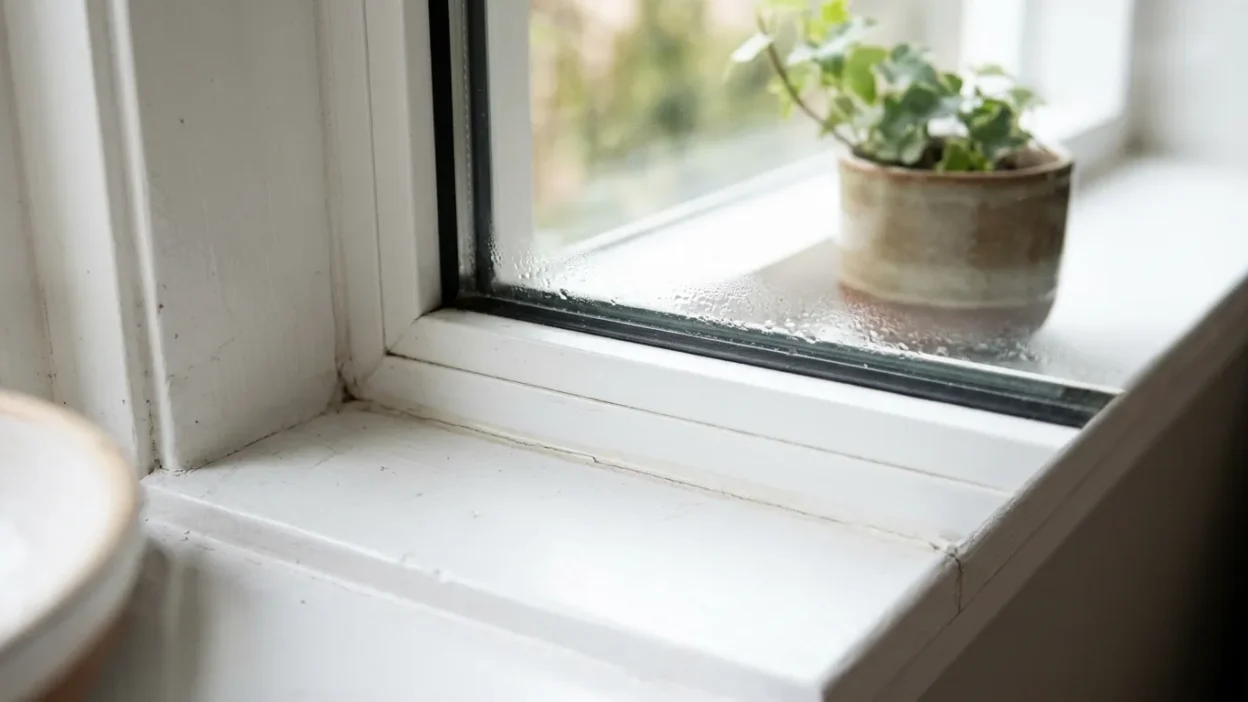
When talking about windows, you may hear the terms window seal and window sill. They sound similar because both are connected to the same part of a window, but they refer to different things. A window seal helps prevent air, water, and moisture from entering or escaping, while a window sill is the horizontal ledge at the bottom of a window. Understanding the difference makes it easier to describe window parts, discuss home repairs, and choose the correct word in everyday conversations.
The confusion often happens because both terms are used when discussing window installation, maintenance, and construction. However, they are not interchangeable. A damaged window seal may cause drafts or leaks, while a damaged window sill may lead to water damage or structural problems. In this guide, you will learn what each term means, how to use it correctly, and how to recognize the difference through simple examples.
Quick Answer
A window seal is a material or barrier that closes gaps around a window to prevent air and water from passing through. A window sill is the horizontal ledge at the bottom of a window, usually inside or outside a building. A seal provides protection, while a sill provides a resting surface and helps direct water away.
Why Do People Confuse Window Seal and Sill?
People confuse window seal and sill because both terms describe parts of a window and are commonly mentioned during installation, cleaning, and repairs.
There are several reasons for this confusion:
- Similar context: Both words appear in conversations about windows, construction, and home improvement.
- Different functions: Although they are connected, they perform separate jobs.
- Repair discussions: Homeowners may use both terms when describing leaks, drafts, or damaged window frames.
- Unfamiliar vocabulary: Beginners may not know which word describes the bottom ledge and which describes the protective barrier.
The easiest way to understand the difference is to remember that a sill is a physical ledge, while a seal is a protective barrier.
What Is a Window Seal?
A window seal is a protective barrier that closes gaps between window components or between the window and its frame. Its main purpose is to prevent unwanted air, water, dust, and moisture from passing through.
Window seals are important for keeping indoor spaces comfortable and protecting buildings from weather damage.
Common Types of Window Seals
Window seals can be made from different materials depending on the window design and installation.
- Rubber seals: Flexible strips that help close gaps around window frames.
- Silicone seals: Flexible sealing materials commonly used around window edges.
- Weatherstripping: Materials fitted around movable windows and doors to reduce air leakage.
- Glazing seals: Materials that help hold glass in place and create a barrier against moisture and air.
Examples of Window Seal in Sentences
- The window seal is damaged and needs to be replaced.
- A proper window seal helps keep cold air outside.
- We noticed water entering through the broken window seal.
- The contractor installed a new seal around the window.
- Check the window seal before winter arrives.
What Is a Window Sill?
A window sill is the horizontal surface or ledge located at the bottom of a window. It can be found inside or outside a building.
An interior window sill provides a small surface where people can place plants, decorations, books, or other objects. An exterior window sill helps direct rainwater away from the wall and window opening.
Window sills can be made from different materials, including wood, stone, concrete, marble, and metal.
Common Types of Window Sills
- Interior window sill: The ledge inside a room, often used for decoration or placing small objects.
- Exterior window sill: The outside ledge that helps direct rainwater away from the building.
- Wooden window sill: A traditional option that can be painted or finished in different styles.
- Stone window sill: A durable option commonly used in residential and commercial buildings.
- Concrete window sill: A strong option often found in masonry construction.
Examples of Window Sill in Sentences
- She placed a small flowerpot on the window sill.
- The wooden window sill needs a fresh coat of paint.
- Rainwater collected on the exterior window sill.
- The cat loves sitting on the window sill.
- We cleaned the dust from the window sill.
Window Seal vs Sill: Comparison Table
| Feature | Window Seal | Window Sill |
|---|---|---|
| Meaning | A protective barrier | A horizontal ledge |
| Main purpose | Prevents air and water leakage | Provides a ledge and helps manage rainwater |
| Location | Around window components and joints | At the bottom of the window |
| Common materials | Rubber, silicone, foam | Wood, stone, concrete, metal |
| Main function | Sealing and insulation | Support and water drainage |
| Common problems | Cracks, gaps, air leaks | Rotting, cracks, water damage |
| Maintenance | Inspect and replace damaged sealing material | Clean, repair, paint, or replace |
| Example | Replace the window seal | Paint the window sill |
When Should You Use Window Seal or Window Sill?
Choosing the correct term depends on what you are describing. Think about whether you mean a protective barrier or a physical ledge.
When to Use Window Seal
Use window seal when discussing:
- Preventing cold air from entering a room.
- Stopping rainwater from leaking through window gaps.
- Repairing damaged rubber or silicone material.
- Improving insulation around windows.
- Replacing worn weatherstripping.
- Protecting window joints from moisture.
Example: The window seal is loose, allowing cold air to enter the bedroom.
When to Use Window Sill
Use window sill when discussing:
- The horizontal ledge below a window.
- Placing plants or decorations near a window.
- Cleaning dust from the bottom window surface.
- Repairing a cracked or damaged ledge.
- Painting a wooden window ledge.
- Directing rainwater away from the building.
Example: I placed my favorite plant on the window sill.
12 Examples of Window Seal vs Sill in Sentences
These examples show how both expressions work in everyday English.
- Window Seal: The window seal is broken, so cold air enters the room.
- Window Sill: My mother placed a vase on the window sill.
- Window Seal: We hired a professional to replace the damaged window seal.
- Window Sill: The wooden window sill looks beautiful after painting.
- Window Seal: A poor window seal can allow rainwater to enter the house.
- Window Sill: The cat was sleeping comfortably on the window sill.
- Window Seal: Check the window seal for cracks before the rainy season.
- Window Sill: Dust has collected along the entire window sill.
- Window Seal: The new window seal improved the room’s insulation.
- Window Sill: He repaired the cracked stone window sill.
- Window Seal: Moisture around the glass may indicate a problem with the window seal.
- Window Sill: The children decorated the window sill with small toys.
Common Mistakes When Using Window Seal and Sill
Even though both terms are related to windows, using one instead of the other can change the meaning of a sentence.
Here are some common mistakes to avoid.
Mistake 1: Using window seal for the bottom ledge
Incorrect: She placed a flowerpot on the window seal.
Correct: She placed a flowerpot on the window sill.
Why? A sill is the horizontal surface where you can place objects.
Mistake 2: Using window sill for a protective barrier
Incorrect: The window sill is allowing cold air to enter through the gaps.
Correct: The window seal is allowing cold air to enter through the gaps.
Why? A seal closes gaps and helps prevent air leakage.
Mistake 3: Treating both words as interchangeable
Incorrect: The worker replaced the window sill to stop air leakage.
Correct: The worker replaced the window seal to stop air leakage.
Why? A seal addresses gaps, while a sill is the ledge beneath the window.
Mistake 4: Assuming every window sill is made of wood
A window sill can also be made from stone, concrete, marble, or metal.
Mistake 5: Assuming a window seal and a window frame are the same
A window frame holds the window structure in place. A seal helps close gaps around window components.
Memory Trick: How to Remember Window Seal vs Sill
Here is a simple trick to remember the difference:
- Seal = Stop leaks: Think of a seal as something that blocks unwanted air and water.
- Sill = Surface: Think of a sill as the surface where you can place a flowerpot or decoration.
Remember this simple sentence:
A seal stops leaks, while a sill holds things.
This easy trick can help you choose the correct term whenever you talk about window installation, maintenance, or repairs.
Window Seal vs Sill in American and British English
The terms window seal and window sill are used in both American and British English. Their basic meanings remain the same.
There is no major spelling difference between the two expressions.
However, some related vocabulary can vary:
- Window sill: Common in both American and British English.
- Windowsill: Also accepted as a closed compound spelling, particularly in American English.
- Window seal: Used in both varieties of English.
- Weatherstripping: Common American English term for materials used to seal gaps around windows and doors.
- Weather seal: Another expression used to describe protective sealing materials.
The main distinction is not regional. It is based on the function of each window component.
Similar Words Related to Window Seal and Sill
Understanding related window vocabulary can make it easier to discuss repairs and construction.
| Word | Meaning |
|---|---|
| Window frame | The structure that holds the window in place |
| Window sash | The part that holds the glass and may move to open or close |
| Weatherstripping | Material used to reduce air and water leakage |
| Caulk | A flexible material used to fill gaps and cracks |
| Glazing | The glass installed in a window |
| Window ledge | Another name for the horizontal surface beneath a window |
| Window gasket | A flexible material that creates a seal between components |
| Window trim | Decorative or finishing material around a window |
These terms are related, but each describes a different window part or material.
Final Verdict: Window Seal or Sill?
Both window seal and window sill are correct expressions, but they have different meanings.
Use window seal when referring to the protective material that prevents air, water, and moisture from passing through gaps around a window.
Use window sill when referring to the horizontal ledge at the bottom of a window, where you might place plants, decorations, or other objects.
The correct choice depends on the part of the window you want to describe. Remember that a seal protects, while a sill provides a surface.
FAQs:
1. Is it window seal or window sill?
Both expressions are correct, but they describe different things. A window seal prevents air and water from passing through gaps, while a window sill is the horizontal ledge at the bottom of a window.
2. What is the bottom ledge of a window called?
The bottom ledge of a window is called a window sill. It can be made from wood, stone, concrete, marble, or other materials.
3. What does a window seal do?
A window seal helps prevent unwanted air, water, dust, and moisture from passing through gaps around window components. It also contributes to insulation and indoor comfort.
4. Is a windowsill the same as a window sill?
Yes. Both spellings refer to the same horizontal ledge beneath a window. The closed spelling, windowsill, and the two-word spelling, window sill, are both accepted.
5. Can a window sill cause water leaks?
Yes. A damaged or poorly installed window sill can contribute to water entering a building. However, leaks may also result from damaged seals, flashing, or other installation problems.
6. How do I know if my window seal is damaged?
Common signs include noticeable drafts, water entering around the window, visible cracks in sealing material, and condensation between double-glazed glass panes. These signs can have different causes, so proper inspection may be necessary.
7. Should I replace a window seal or window sill?
It depends on the damage. Replace or repair the seal if the protective material is cracked or no longer closes gaps properly. Repair or replace the sill if the ledge is rotten, cracked, or seriously damaged.
Remember This
- Window seal: A protective barrier that helps prevent air and water leaks.
- Window sill: The horizontal ledge at the bottom of a window.
- Seal = Protection.
- Sill = Surface.
Both terms are correct, but they cannot be used interchangeably.
Conclusion
Understanding the difference between window seal and sill is simple once you know what each part does. A window seal protects your home by closing gaps and reducing unwanted air and water leakage. A window sill is the horizontal ledge beneath a window that provides a surface and can help direct rainwater away from the building.
Whenever you discuss window repairs, installation, or home maintenance, choose the word that matches the part you mean. Remember the simple rule: a seal stops leaks, while a sill provides a ledge.

Donald Andrew is the creative mind behind PunsJet.com, where he shares clever wordplay and humorous puns for readers around the world. With a passion for language and comedy, Donald enjoys crafting witty jokes that bring smiles to everyday conversations. His goal is to make humor simple, fun, and easy to share.